Moon over our back yard! #astronomy #yyc #moon

Public posts with this hashtag.
Moon over our back yard! #astronomy #yyc #moon
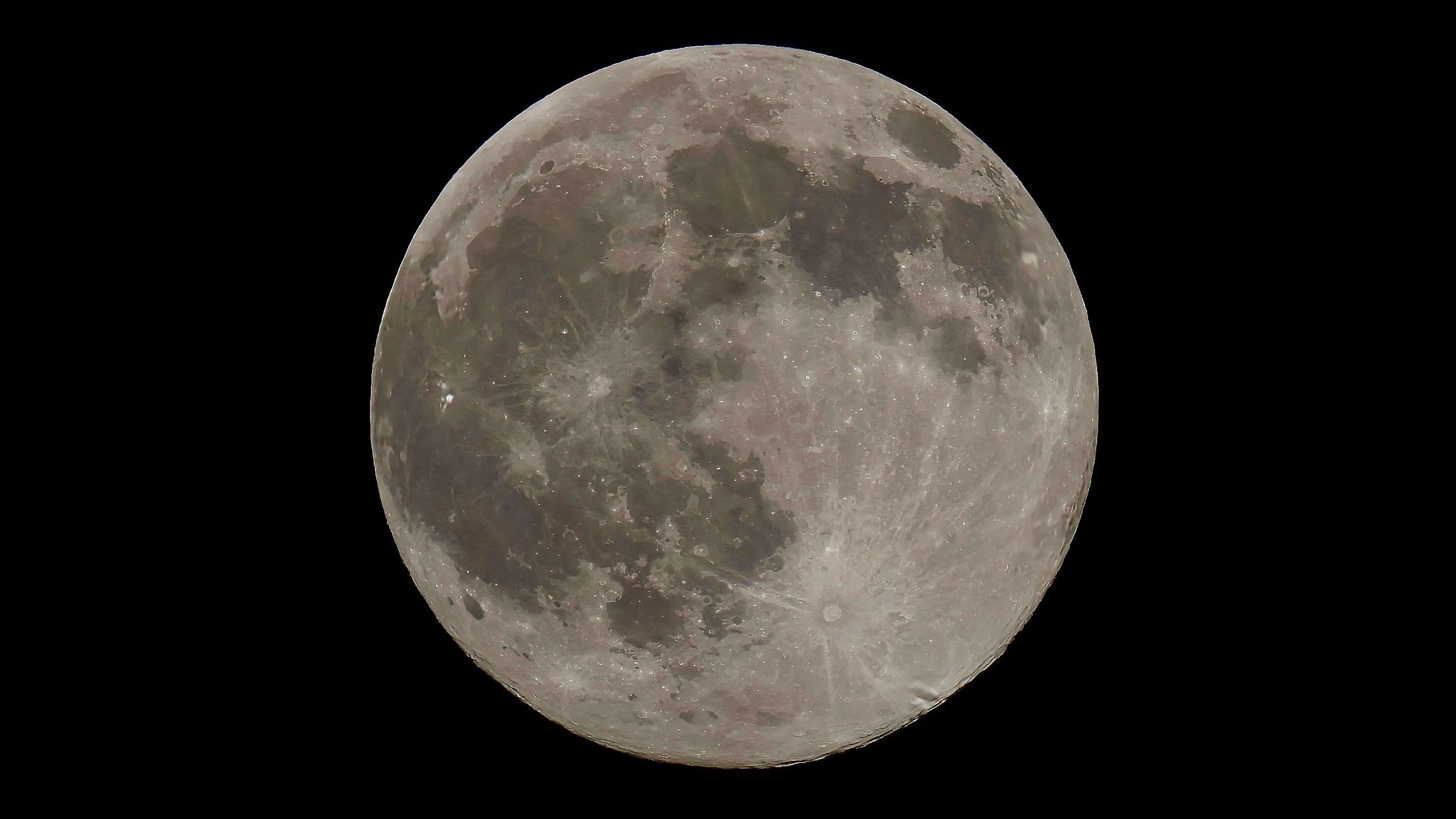
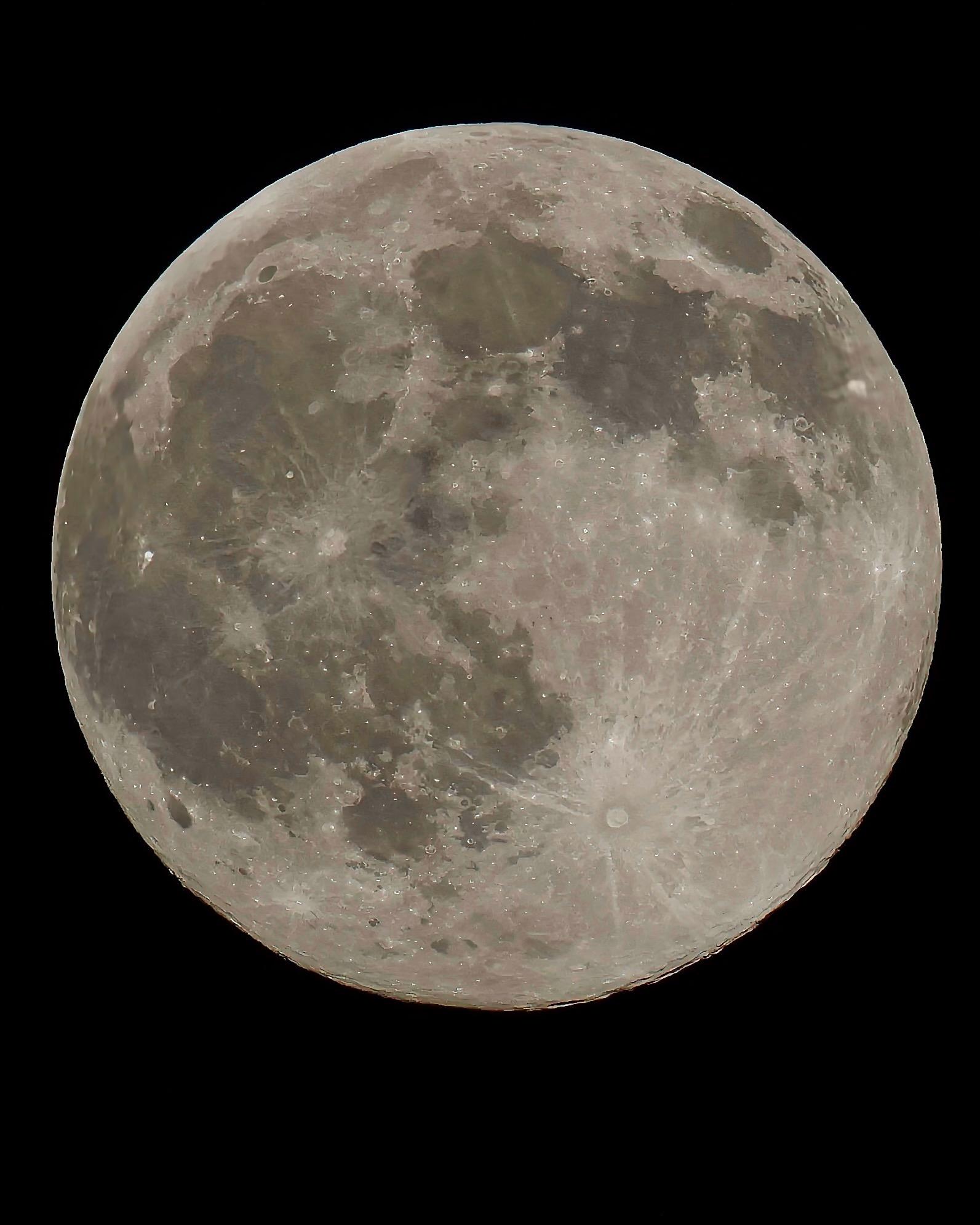
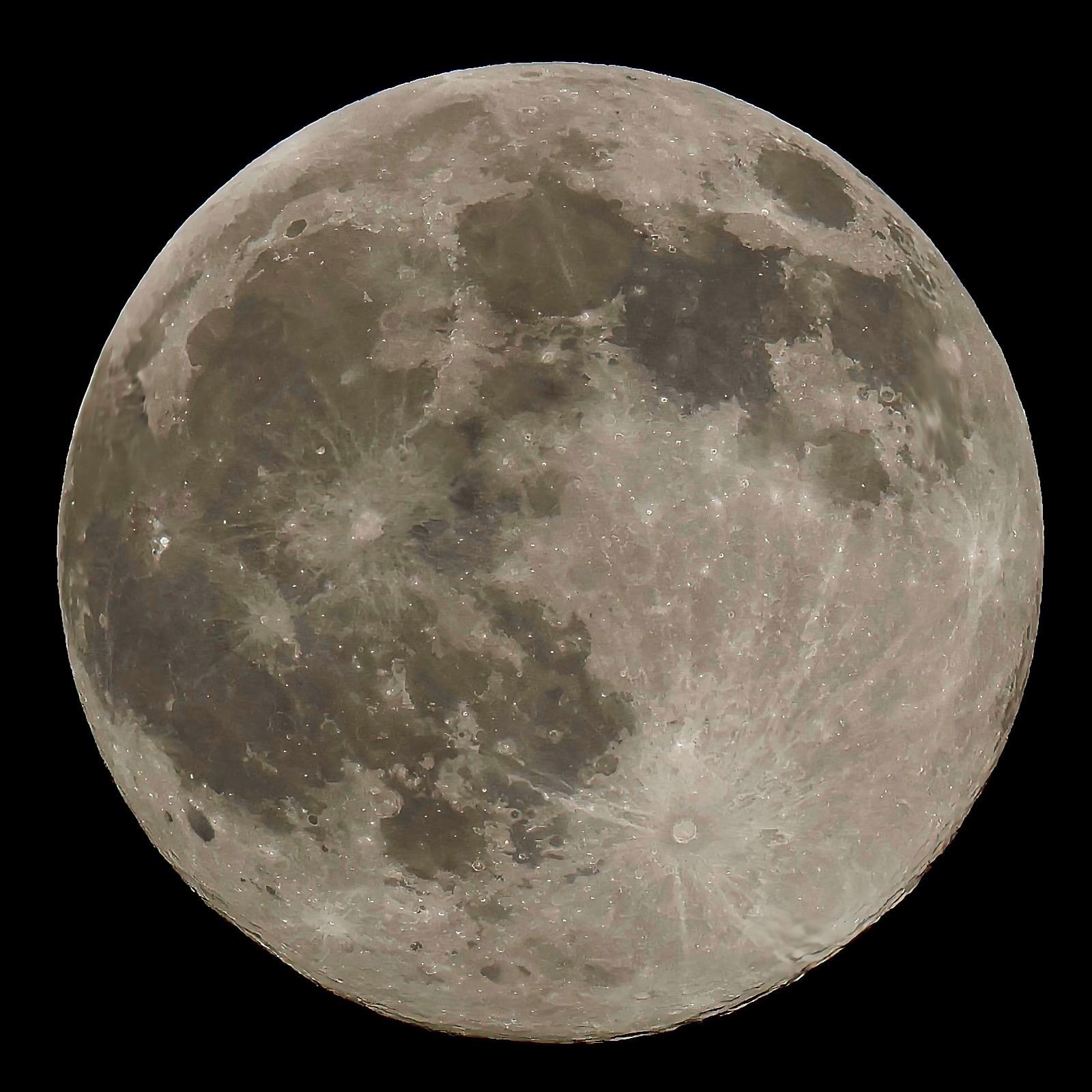
The "Hunters Moon" of October 2026 shining over Trumbull, CT.
#FullMoon #Moon #HuntersMoon #TrumbullCT #Connecticut #Astronomy #Astrophotography
October 25, 2026
Dark Matter in a Simulated Universe
* Credit & Copyright: Tom Abel & Ralf Kaehler (KIPAC , SLAC), AMNH
https://kipac.stanford.edu/people/tom-abel
https://www.slac.stanford.edu/~kaehler/
https://kipac.stanford.edu/
https://www6.slac.stanford.edu/
https://www.amnh.org/
* Text: Jerry Bonnell
Explanation:
Is our universe haunted? It might look that way on this dark matter map. The gravity of unseen dark matter is the leading explanation for why galaxies rotate so fast, why galaxies orbit clusters so fast, why gravitational lenses so strongly deflect light, and how visible matter is distributed. The featured image from the American Museum of Natural History's Hayden Planetarium Space Show, Dark Universe, highlights one example of how pervasive dark matter might haunt our universe. In this frame from a detailed computer simulation, complex filaments of dark matter, shown in black, are strewn about the universe like spider webs, while the relatively rare clumps of familiar baryonic matter are colored orange. These simulations are good statistical matches to astronomical observations. In what is perhaps a scarier turn of events, dark matter -- although quite strange and in an unknown form -- is no longer thought to be the strangest source of gravity in the universe. That honor now falls to dark energy, a more uniform source of repulsive gravity that seems to now dominate the expansion of the entire universe.
https://science.nasa.gov/image-article/apod-2026-october-25-dark-matter-in-a-simulated-universe/
#space #universe #map #astronomy #astrophotography #photography #science #nature #NASA #ESA #rubin #education #apod

 Kavli Institute for Particle Astrophysics and Cosmology (KIPAC)Tom AbelProfessor of Particle Physics and Astrophysics and of Physics
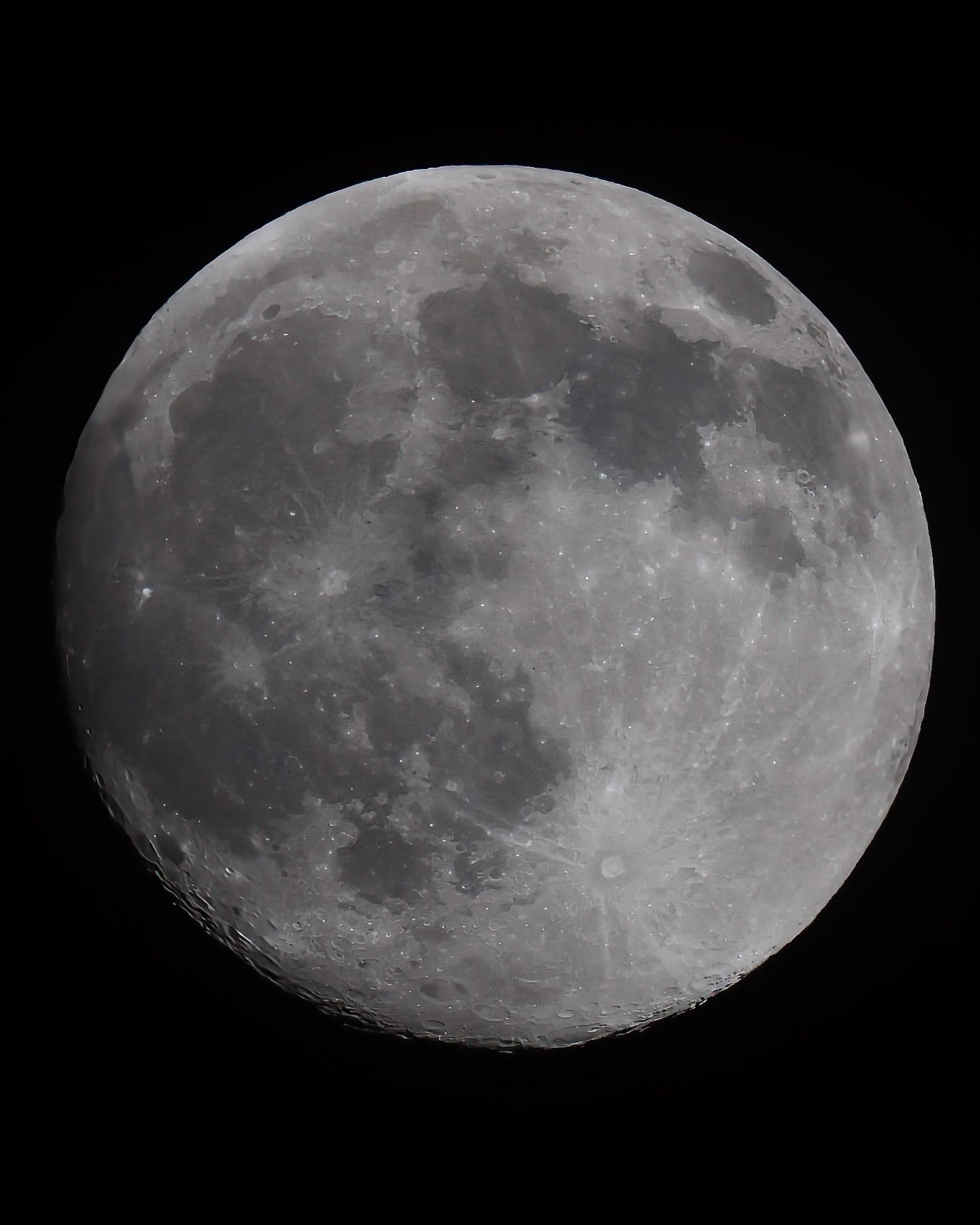
Tonight's *almost* full moon over Trumbull, CT. (Technically, tomorrow night is the FULL moon or "Hunters Moon". )
#Moon #FullMoon #Astronomy #Astrophotography #TrumbullCT #Connecticut
German astronomer Wilhelm Schickard, who died OTD in 1635, was for a while considered the inventor of the mechanical calculator https://toilet-guru.com/blog/36.html?s=mb #astronomy #history
 Toilets of the WorldAlways Go Pee, Even at a Formal Party — The Death of Tycho BraheTycho Brahe Died Because He Refused To Pee — A blog about toilets
October 24, 2026
* Credit: ESA/Rosetta/Philae/CIVA
http://rosetta.esa.int/
* Text: Jerry Bonnell
Explanation:
This Rosetta spacecraft selfie was snapped on October 7th, 2014. At the time the comet-chasing spacecraft was about 472 million kilometers from planet Earth, but only 16 kilometers from the surface of comet 67P/Churyumov-Gerasimenko. Looming beyond the spacecraft near the top of the frame, dust and gas stream away from the comet's curious double-lobed nucleus. Bright sunlight glints off one of Rosetta's 14 meter long solar arrays. In fact, two exposures, one short and one long, were combined to record the dramatic high contrast scene using the CIVA camera system on Rosetta's still-attached Philae lander. Its chosen primary landing site was on the visible hemisphere of the smaller lobe of the nucleus. This was the last image from Philae's camera before the lander separated from Rosetta on November 12. Shortly after separation Philae took another image looking back toward the orbiter and began its descent to the nucleus of the comet.
https://science.nasa.gov/image-article/apod-2026-october-24-rosettas-selfie/
#space #comets #astrophotography #photography #science #astronomy #nature #NASA #education #apod

 NASA ScienceAPOD: 2026 October 24 – Rosetta's Selfie - NASA Science
October 23, 2026
Andromeda in Southern Spring
* Credit & Copyright: Lucy Yunxi Hu
https://www.astrolucyhu.com/about-lucy
* Text: Jerry Bonnell
Explanation:
Looking toward the north from Mullion, New South Wales, Australia, the Andromeda Galaxy never gets more than a few degrees above the horizon. During the southern hemisphere spring, Andromeda is highest in the sky around midnight though. And in this telephoto scene from October 10/11, multiple exposures were used to reveal the spiral galaxy in tantalizing detail as it climbed above rolling Australian hills. Also known as M31, the Andromeda Galaxy is one of the brightest objects in the Messier catalog, but is only visible to the unaided eye as a small, faint, fuzzy patch. Digitally tracked and stacked frames were combined with a foreground shot in the deep astro-image composite to reveal the galaxy's greater extent in planet Earth's night. In the springtime night skyscape,the closest large spiral galaxy spans nearly 6 full moons.
https://science.nasa.gov/image-article/apod-2026-october-23-andromeda-in-southern-spring/
#space #galaxy #astrophotography #photography #science #astronomy #nature #NASA

French astronomer Guillaume Le Gentil, who died OTD in 1725, discovered several nebulae; he made unsuccessful attempts to observe the 1761 and 1769 transits of Venus from India https://cromwell-intl.com/travel/france/paris-megaliths/?s=mb #travel #France #astronomy #history
 Bob's Pages of Travel, Linux, Cybersecurity, and MoreNeolithic Megaliths in the Suburbs near the Paris ObservatoryVisit megalithic structures near the Paris Observatory in the southern suburbs of the city.
French astronomer Guillaume Le Gentil, who died OTD in 1792, discovered several nebulae; see the French national observatory outside #Paris near some megalithic structures https://cromwell-intl.com/travel/france/paris-megaliths/?s=mb #travel #France #astronomy
Bob's Pages of Travel, Linux, Cybersecurity, and MoreNeolithic Megaliths in the Suburbs near the Paris ObservatoryVisit megalithic structures near the Paris Observatory in the southern suburbs of the city.
October 22, 2026
The First Green Star, WD J1330+6435
* Credit & Copyright: Mark A. Garlick/University of Warwick
https://markgarlick.com/
https://warwick.ac.uk/
* Text: Cecilia Chirenti
Explanation:
Star light, star bright: is there a green star out tonight? Other than the Sun, all stars are so far from Earth that they appear as points in the sky. They are mostly white, but sometimes noticeably red or blue. This color typically relates to the temperature: blue stars are hotter than red stars. What about other colors? The featured image is an illustration showing WD J1330+6435, a white dwarf star, surrounded by an accretion disk with gas and rocks orbiting the star. White dwarfs are small, faint stars that are left over when a star like the Sun exhausts its nuclear fuel. Astronomers recently found that some white dwarf stars, despite their name, would appear yellow, green, cyan, pink, or purple. In these cases, trace elements that were accreted to these stars interact with the stellar atmosphere and shift its normally white color. But, alas! I wish I may, I wish I might, but they are too faint to see tonight...
https://science.nasa.gov/image-article/apod-2026-october-22-the-first-green-star-wd-j13306435/
#space #dwarfs #giants #astrophotography #photography #science #astronomy #physics #nature #NASA #ESA #education #apod

 MarkGarlick.comHome | MarkGarlick.comOnline gallery of space and astronomical illustration and animation
German astronomer Michael Maestlin, who died OTD in 1631, was the mentor of Johannes Kepler, one of the most significant astronomers between the times of Copernicus and Kepler https://toilet-guru.com/blog/36.html?s=mb #astronomy #history
Toilets of the WorldAlways Go Pee, Even at a Formal Party — The Death of Tycho BraheTycho Brahe Died Because He Refused To Pee — A blog about toilets
Home, a bit sick:
After a random idea at 5am I'm now back on a Egyptian decans project I half abandoned years ago, and now it's finally giving answers. I vibe coded a more rigorous version of a tedious manual approach: fully computed skies for Thebes, Abydos and Memphis, 518 stars, the decan list fitted as one sequence. It low key checks out.
Three decans now stand firm: Sothis is still Sirius, "the red one" is ε Scorpii, and tpy-ꜥ ꜣḫwy is Fomalhaut. Between them runs a road of stars through Hydra, Centaurus and Scorpius to Sagittarius.
2014 May 12
Illustris Simulation of the Universe
* Video Credit: Illustris Collaboration, NASA, PRACE, XSEDE, MIT, Harvard CfA;
https://physics.mit.edu/faculty/mark-vogelsberger/
https://www.illustris-project.org/people/
https://prace-ri.eu/
https://www.cfa.harvard.edu/
https://www.xsede.org/
https://www.nasa.gov/
* Music: The Poisoned Princess (Media Right Productions)
https://www.mediarightproductions.com/
Explanation:
How did we get here? Click play, sit back, and watch. A new computer simulation of the evolution of the universe -- the largest and most sophisticated yet produced -- provides new insight into how galaxies formed and new perspectives into humanity's place in the universe. The Illustris project -- the largest of its type yet -- exhausted 20 million CPU hours following 12 billion resolution elements spanning a cube 35 million light years on a side as it evolved over 13 billion years. The simulation is the first to track matter into the formation of a wide variety of galaxy types. As the virtual universe evolves, some of the matter expanding with the universe soon gravitationally condenses to form filaments, galaxies, and clusters of galaxies. The above video takes the perspective of a virtual camera circling part of this changing universe, first showing the evolution of dark matter, then hydrogen gas coded by temperature (0:45), then heavy elements such as helium and carbon (1:30), and then back to dark matter (2:07). On the lower left the time since the Big Bang is listed, while on the lower right the type of matter being shown is listed. Explosions (0:50) depict galaxy-center supermassive black holes expelling bubbles of hot gas. Interesting discrepancies between Illustris and the real universe do exist and are being studied, including why the simulation produces an overabundance of old stars.
https://apod.nasa.gov/apod/ap140512.html
* i converted and compressed this video to mp4 -crf 28 with ffmpeg
#space #universe #map #astronomy #astrophotography #photography #science #nature #NASA #ESA #education