X XFediYour place in the Fediverse
XFEDI

#QuantumComputing

ActivityPub

Public posts with this hashtag.

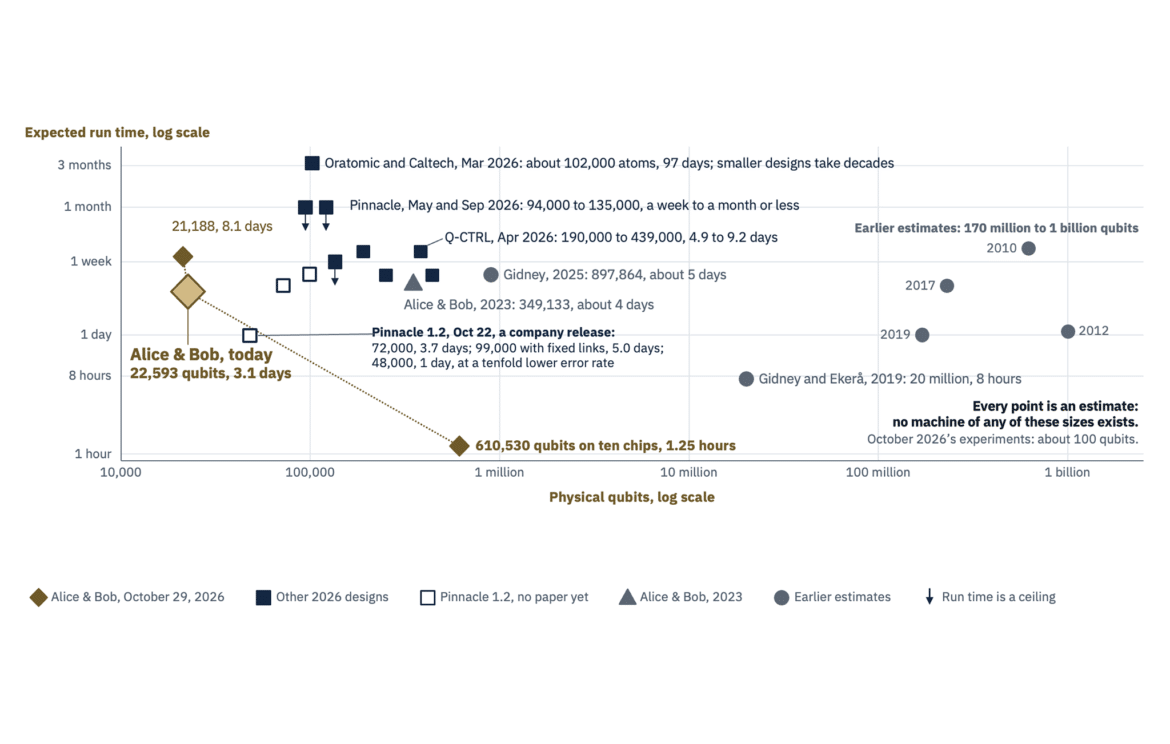
Alice & Bob published a resource estimate today: 22,593 cat qubits could factor RSA-2048 in about three days, and the elliptic-curve discrete logarithm on secp256k1, Bitcoin's curve, would take about an hour on at most 29,588 qubits.

https://postquantum.com/security-pqc/alice-bob-rsa-2048-cat-qubits/

What the paper achieves:
• The smallest RSA-2048 estimate I know of that runs in days, and the lowest qubits times runtime of any that comes with a paper.
• A physical compilation of Shor's algorithm for cat qubits, with layouts and schedules for every qubit of the dominant subroutines.
• A proposed common benchmark, a 512-bit discrete logarithm, that other architectures could run before RSA-2048.

What it assumes:
• No bit-flips during the run, which the paper equates with a bit-flip time of about 100 years per qubit.
• The best peer-reviewed measurement with quantum control is 22 seconds. Alice & Bob's own preliminary results reach 44 minutes, and about four hours on qubits where it has not yet shown the same level of control.
• Its largest chip with error-correction results has 12 cat qubits, running a distance-3 repetition code that is not yet below threshold.
• A variant with an extra error-correction layer relaxes the bit-flip requirement to about 1.3 hours, at about 45,000 qubits, but no gate set exists yet for that layer.

What it changes:
• No compliance date. NIST's final IR 8547 deprecates RSA and ECC after 2030 and disallows them after 2035.
• The order of work, possibly: on the same machine an elliptic-curve key takes about an hour against about three days for RSA-2048.

Free webinar on the 2026 estimates, today at 15:00 UTC, recording for everyone who registers: https://quantumacademy.com/event/webinar-q-day-estimates/
#QuantumComputing #PQC #Cryptography #InfoSec #QDay #CRQC

PostQuantum.comAlice & Bob: 22,593 Qubits Could Break RSA-2048Alice & Bob's Shor estimate puts RSA-2048 at 22,593 cat qubits and three days. What it assumes, and what the headlines will get wrong.
↩ Reply ♡ 0 · ↻ 0 ↗ Original

A New Chemistry Breakthrough Could Change How Scientists Build Quantum Computers

https://scitechdaily.com/a-new-chemistry-breakthrough-could-change-how-scientists-build-quantum-computers/

#science #chemistry #quantumcomputing

scitechdaily.comA New Chemistry Breakthrough Could Change How Scientists Build Quantum ComputersBy modeling diamond defects as molecules, scientists can predict their behavior faster and identify promising building blocks for quantum computers and sensors.
↩ Reply ♡ 0 · ↻ 0 ↗ Original

(One of) the year's biggest papers on what it takes to break RSA and ECC goes public tomorrow. I have read it. It is serious work, but it is also going to be badly misread. It changes what a codebreaking quantum computer could look like, if one big assumption holds. Expect this paper to dominate the conversation for days, including various sky-is-falling takes.

Luckily, our Q-Day estimates webinar was already on the calendar for tomorrow. The paper goes public one hour before we go live. This year Iceberg Quantum, Google, Oratomic and IonQ each published careful resource estimates, and each time the headlines exaggerated. Expect the same tomorrow.

We will put tomorrow's paper next to previous ones and go through:

- what it actually achieved in this paper and throughout the year (and with what assumptions)

- whether any of it moves Q-Day

- what to tell your board when it asks, because they will

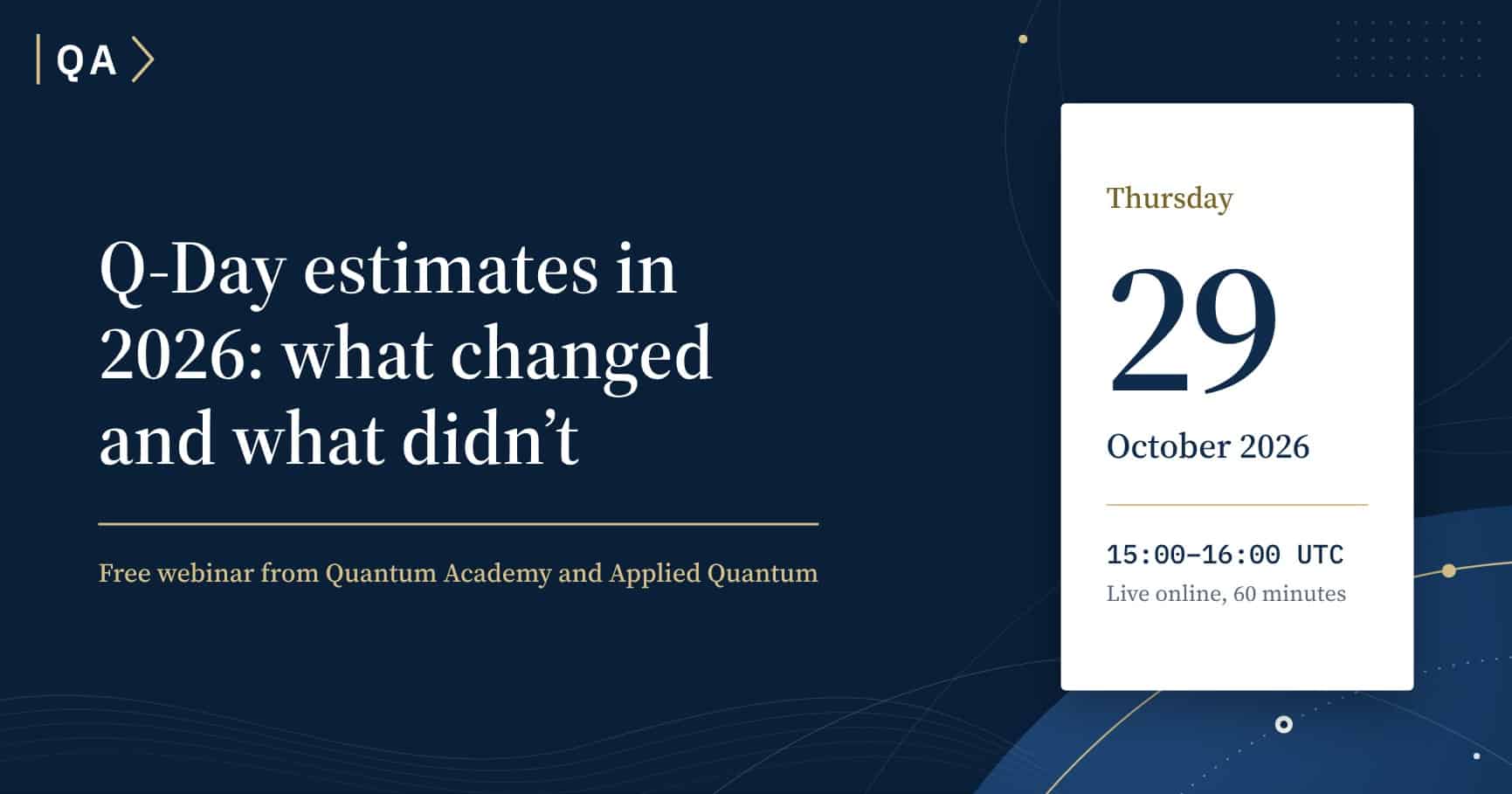
Free one-hour webinar from Quantum Academy and Applied Quantum, tomorrow, 29 October, at 15:00 UTC (16:00 CET, 11:00 ET). It will be one of the first independent readings of the paper.

https://quantumacademy.com/event/webinar-q-day-estimates/

#QuantumComputing #PostQuantumCryptography #PQC #QDay #CyberSecurity #CISO #Cryptography #QuantumSecurity

Quantum AcademyQ-Day Estimates in 2026: Free Webinar | Quantum AcademyFree webinar from Quantum Academy and Applied Quantum: how far 2026 cut the qubit estimates for breaking RSA and ECC, and what didn't change.
↩ Reply ♡ 0 · ↻ 0 ↗ Original

“The world of computing was once rich with opportunities for mavericks and the marginalized, but several trends have threatened the freedom to innovate.”

Our author Andrew Oram explores what this means for our digital environment.

Read Part 1 of this LPI series: https://lpi.org/oplm

#linux #FOSS #opensource #freesoftware #linuxcommunity #LPI #AI #chips #quantumcomputing

Linux Professional Institute (LPI)Open Source at a Crossroads: The Centralization of Advanced ComputingHow can open source respond to AI, powerful chips, and quantum computing? Explore the challenges of an increasingly centralized IT world.
↩ Reply ♡ 0 · ↻ 0 ↗ Original

“The centralization of advanced computing, which includes #AI, powerful new #chips, and #quantumcomputing, is one of the trends threatening our digital freedom,” says our author Andrew Oram.

Explore Part 1 of this LPI series to learn more: https://lpi.org/oplm

#linux #FOSS #opensource #freesoftware #linuxcommunity #LPI #AI #chips

Linux Professional Institute (LPI)Open Source at a Crossroads: The Centralization of Advanced ComputingHow can open source respond to AI, powerful chips, and quantum computing? Explore the challenges of an increasingly centralized IT world.
↩ Reply ♡ 0 · ↻ 0 ↗ Original

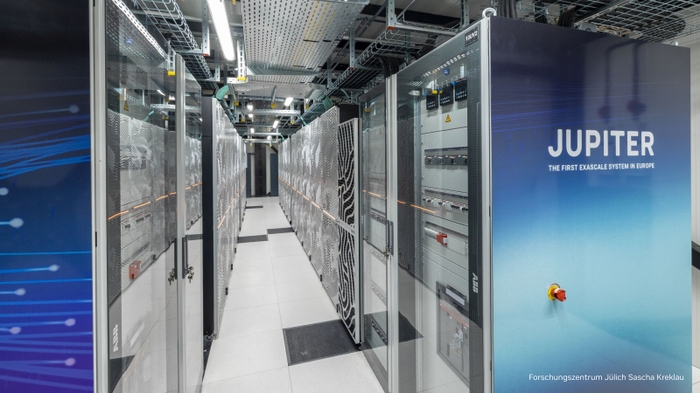
Nvidia ran a record-breaking fault-tolerant quantum computing simulation on the JUPITER supercomputer. Learn how this accelerates quantum applications.

#Nvidia #QuantumComputing #JUPITER #Supercomputer #AI

https://dailytechnow.com/nvidia-quantum-computing-simulation/

Daily Tech NowNvidia Quantum Computing Simulation Breaks RecordsNvidia ran a record-breaking fault-tolerant quantum computing simulation on the JUPITER supercomputer. Learn how this accelerates quantum applications.
↩ Reply ♡ 0 · ↻ 0 ↗ Original