X XFediYour place in the Fediverse
XFEDI

#appsec

ActivityPub

Public posts with this hashtag.

T

YesWiki’s Bazar search API takes a field name, wraps it in backticks as a SQL identifier, and escapes it with mysqli_real_escape_string — a function that doesn’t touch backticks because backticks aren’t special inside a string literal.

CVE-2026-116207, CVSS 9.1, unauthenticated, in-band. One GET request. Password hashes in the response body.

Fix: 4.7.0. Seventh SQL injection finding in YesWiki this year.

🔗 https://threataft.com/articles/yeswiki-cve-2026-116207-sql-injection-preparesearchrequest

#SQLi #CVE #YesWiki #AppSec #InfoSec

ThreatAftYesWiki 9.1: A Backtick in the Wrong Escape | ThreatAftCVE-2026-116207: unauth SQL injection in YesWiki's Bazar search API. 9.1 v3.1 / 8.8 v4.0, read-only and in-band. Fixed in 4.7.0 and 5.0.0-alpha4.
↩ Reply ♡ 0 · ↻ 0 ↗ Original

A leaked #LiteLLM master key helped attackers steal #GitHub tokens and poison software releases.
The post-mortem of the attack is a fascinating read, particularly if you are using GitHub:
👇

#AppSec #SoftwareSupplyChainSecuritu

https://thehackernews.com/2026/10/leaked-litellm-master-key-let-attackers.html

The Hacker NewsLeaked LiteLLM Master Key Let Attackers Steal GitHub Tokens and Hijack Release PipelineAn unrevoked LiteLLM master key enabled GitHub token theft and a malicious PyPI release that steals credentials and installs a backdoor.
↩ Reply ♡ 0 · ↻ 0 ↗ Original

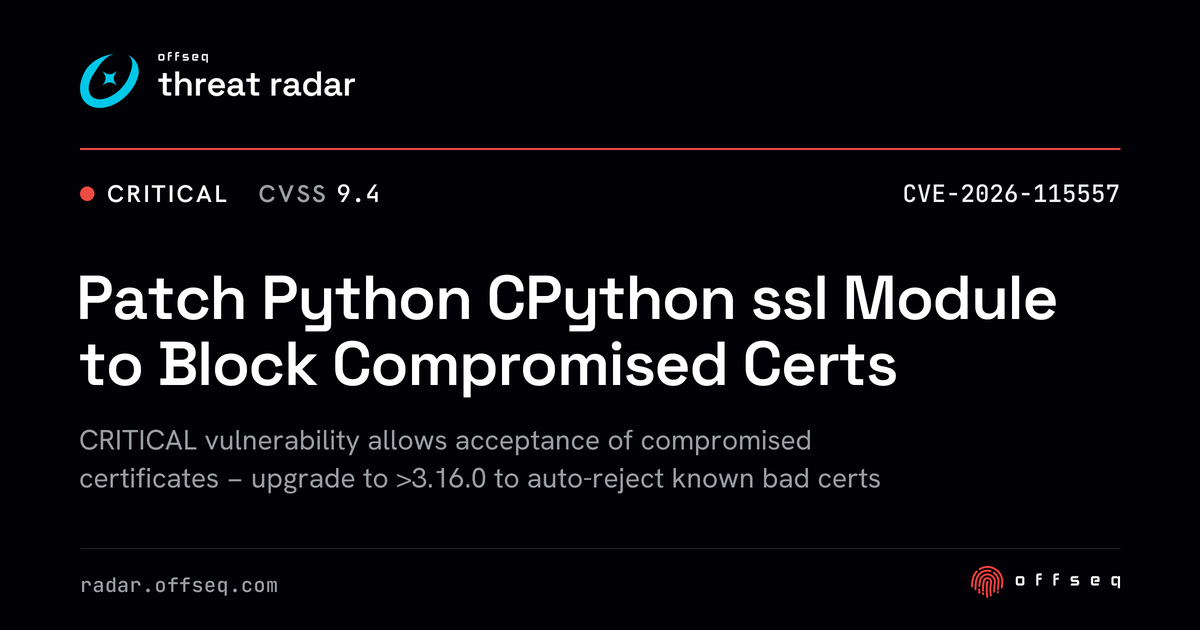
CVE-2026-115557 (CRITICAL): Python CPython ssl module accepted compromised certs when revocation was misconfigured. Fix: versions >3.16.0 auto-reject known bad certs via denylist. Patch now. https://radar.offseq.com/threat/cve-2026-115557-cwe-299-improper-check-for-certificate-revocation-in-python-software-foundation-cpython-fb92d56c9f38c582 #OffSeq #Python #CVE #SSL #AppSec

Critical threat: CVE-2026-115557: CWE-299 Improper check for certificate revocation in Python Software Foundation CPy
OffSeq Threat RadarCVE-2026-115557: CWE-299 Improper check for certificate… | Threat RadarCVE-2026-115557 is a critical vulnerability in the Python Software Foundation's CPython implementation affecting versions from 0 up to and including 3.16.0. It…
↩ Reply ♡ 0 · ↻ 0 ↗ Original

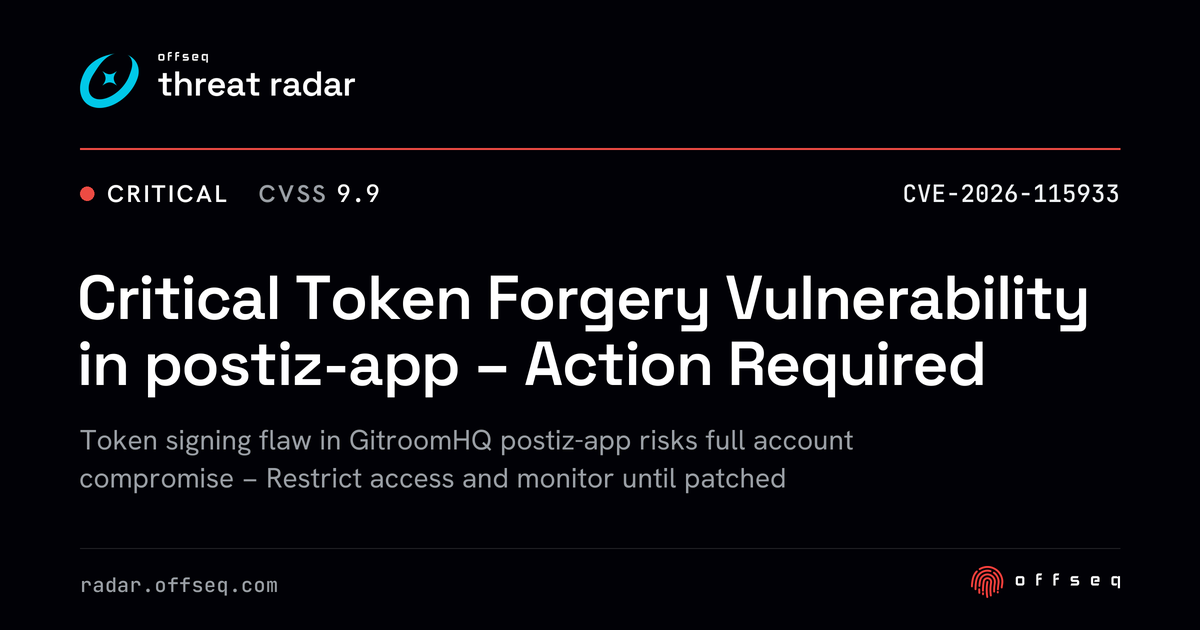
CRITICAL: GitroomHQ postiz-app (2.15.0 – 2.25.2) vulnerable to CVE-2026-115933. Shared secret flaw allows forging of session/invite/reset tokens — risking full account compromise. Restrict access, monitor usage. https://radar.offseq.com/threat/cve-2026-115933-cwe-290-in-gitroomhq-postiz-app-49e726f3e86131f8 #OffSeq #CVE2026115933 #AppSec #Security

Critical threat: CVE-2026-115933: CWE-290 in GitroomHQ postiz-app
OffSeq Threat RadarCVE-2026-115933: CWE-290 in GitroomHQ postiz-app | Threat RadarPostiz-app versions from 2.15.0 up to but not including 2.25.3 have a critical vulnerability (CVE-2026-115933) where session, invitation, and password reset…
↩ Reply ♡ 0 · ↻ 0 ↗ Original
T

New PHP security concern: CVE-2026-115560 👀

A potential PHP RCE path involving session upload progress and a runtime serialization-handler mismatch.

The catch: exploitation depends on a specific configuration.

Mitigation: disable `session.upload_progress.enabled` at the server level.

Technical breakdown: https://thecybersecguru.com/exploits/cve-2026-115560-php-session-rce/

#InfoSec #PHP #AppSec

❞ Quoted postThe CyberSec Guru

Content warning: CVE-2026-115560 is a potential PHP RCE tied to session upload progress. Learn the affected configuration, security risks, and official mitigation

The CyberSec GuruCVE-2026-115560: PHP RCE Risk After PHP2Shell Patches | The CyberSec GuruCVE-2026-115560 is a potential PHP RCE tied to session upload progress. Learn the affected configuration, security risks, and official mitigation
↩ Reply ♡ 0 · ↻ 0 ↗ Original

A Brotli decoder flaw behind a Node.js RCE also affects Bun, Python and other widely used software. Fixes are rolling out across Node.js, Envoy and others, while unpatched deployments handling untrusted compressed input stay exposed. Patch affected runtimes and proxies now. #AppSec #Brotli #NodeJS #Envoy

https://cyberworldops.eu/en/brotli-decoder-flaw-prompts-fixes-across-nodejs-envoy-and-other

Brotli decoder flaw prompts fixes across Node.js, Envoy and other software
CyberWorldOpsBrotli decoder flaw prompts fixes across Node.js, Envoy and other softwareBrotli decoder flaw prompts fixes across Node.js, Envoy and other software
↩ Reply ♡ 0 · ↻ 0 ↗ Original

🎤 Got AppSec expertise to share? We want YOU!

OWASP Global AppSec Training Days are known for outstanding trainers and in-depth, hands-on courses. Now we’re looking for trainers to join the lineup in Vienna! 🇦🇹

Submit now: https://sessionize.com/owasp-global-appsec-EU--2027-cft/

#GlobalAppSec #OWASP #AppSec #CyberSecurity

Media attachment
sessionize.comOWASP Global AppSec EU (Vienna) 2027 - CFT : Call for SessionsOWASP Global AppSec Training Days are known for their top notch trainers and in-depth course material.  The OWASP Foundation would like to invite you ...
↩ Reply ♡ 0 · ↻ 0 ↗ Original
T

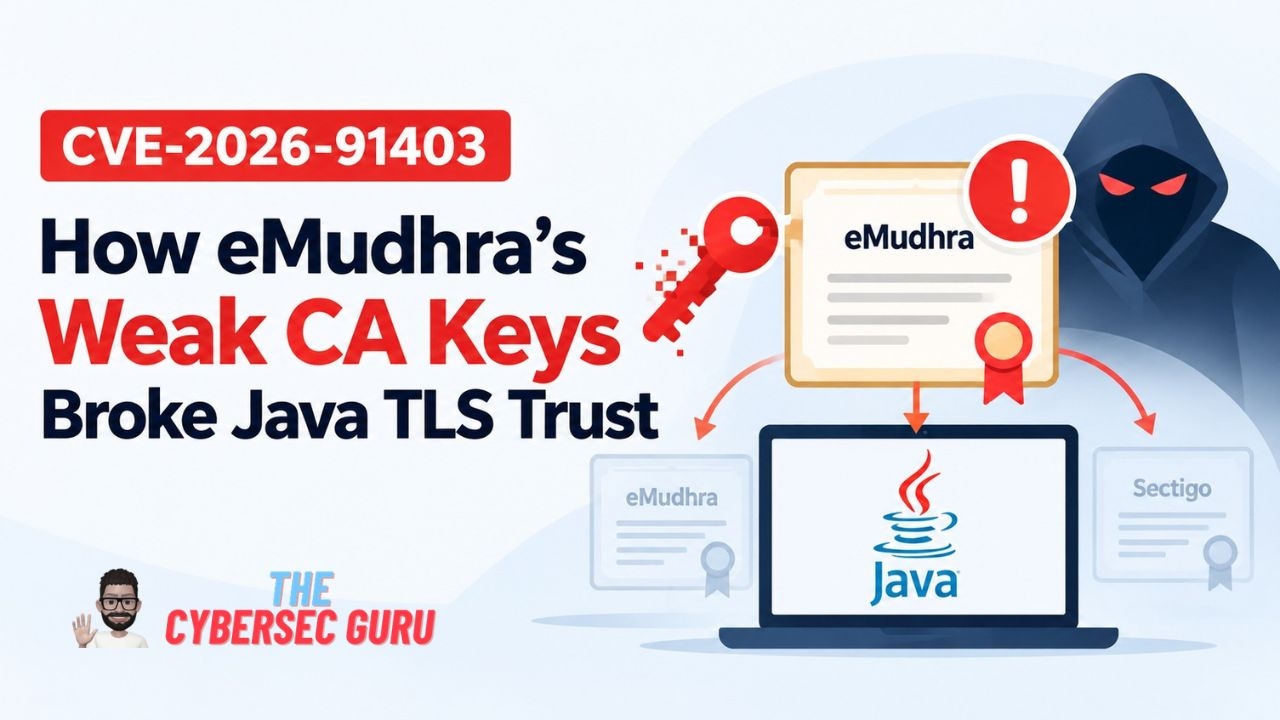
🚨 Java TLS Vulnerability: CVE-2026-91403 (CVSS 9.1)

Eight eMudhra intermediate CA private keys reportedly had just 8 bits of entropy, making them recoverable in milliseconds.

The result? Forged certificates that could undermine Java JSSE TLS trust, including through cross-signed certificate chains.

☕ Java SE & GraalVM
🔐 Certificate validation at risk
🛡️ Emergency security fixes

Running Java in production? Check your JDK version and apply the relevant security updates.

Technical breakdown 👇
https://thecybersecguru.com/news/cve-2026-91403-java-tls-vulnerability/

#Java #InfoSec #AppSec

❞ Quoted postThe CyberSec Guru

Content warning: Learn how CVE-2026-91403 exposed Java TLS to forged certificates through weak eMudhra CA keys, cross-signing risks, and JSSE trust failures

The CyberSec GuruCVE-2026-91403: Java TLS Vulnerability Explained | The CyberSec GuruLearn how CVE-2026-91403 exposed Java TLS to forged certificates through weak eMudhra CA keys, cross-signing risks, and JSSE trust failures
↩ Reply ♡ 0 · ↻ 0 ↗ Original

CVE-2026-115931 (CRITICAL, CVSS 9.9): GitroomHQ postiz-app (2.23.0 < 2.25.2) allows file reads and backend shutdowns via unrestricted helper function access. Restrict self-registration and monitor logs. https://radar.offseq.com/threat/cve-2026-115931-cwe-470-in-gitroomhq-postiz-app-f8eeba46566eb1fe #OffSeq #CVE #Vuln #AppSec

Critical threat: CVE-2026-115931: CWE-470 in GitroomHQ postiz-app
OffSeq Threat RadarCVE-2026-115931: CWE-470 in GitroomHQ postiz-app | Threat RadarCVE-2026-115931 is a critical vulnerability in GitroomHQ's postiz-app versions from 2.23.0 up to but not including 2.25.2. It allows authenticated users to…
↩ Reply ♡ 0 · ↻ 0 ↗ Original

Psst - does anyone of you want to join the Open Security Conference 2026? A spot opened up so jump on the waiting list for your chance to get that last minute package!

➡️➡️➡️ https://opensecurityconference.org/conference/registration

Please kindly help spread the word! 😊

#osco #osco26 #Security #CyberSecurity #InfoSec #AppSec #OTSecurity [lisi]

Open Security ConferenceRegistrationWelcome to the Open Security Conference (osco), the people-centred international gathering for everyone interested in cybersecurity. Join us 5-8 November 2026 in Rückersbach, Germany.
↩ Reply ♡ 0 · ↻ 0 ↗ Original

Imperva demonstrated remote code execution on stock Node.js 24 via an out-of-bounds write in the bundled Brotli decoder, CVE-2026-111497. Any service decompressing untrusted Brotli input risks full server compromise. #NodeJs #BrotliDecoder #AppSec

https://cyberworldops.eu/en/crafted-brotli-input-yields-code-execution-on-a-stock-nodejs-24-build

Crafted Brotli input yields code execution on a stock Node.js 24 build, Imperva shows
CyberWorldOpsImperva Demonstrates Brotli Code Execution in Node.jsImperva demonstrated crafted Brotli input causing code execution on a stock Node.js build via request and response paths, with fixes and limits explained.
↩ Reply ♡ 0 · ↻ 0 ↗ Original

----------------

🛠️ Tool: security-audit, the coding-agent skill that seeded Cloudflare's vulnerability discovery harness
===================

Cloudflare has published security-audit, a coding-agent skill that turns an agent into a security auditor. Per its README, this is the single-repo starting point that grew into the multi-stage, fleet-wide vulnerability discovery harness documented in the blog post "Build your own vulnerability harness".

What the skill does

The audit runs in six phases:
1. Reconnaissance: map architecture, trust boundaries, input surfaces, prior evidence, and deterministic coverage into architecture.md and coverage-ledger.json.
2. Coverage-led hunting: isolated hunter agents are assigned from ledger units, log their checks, and coverage critics look for gaps.
3. Candidate validation: every unique candidate goes to a fresh verifier whose stated goal is to disprove it.
4. Structured output: confirmed, needs_validation, and rejected records are written to findings.json and checked against report-schema.json.
5. Independent record verification: fresh agents verify final source claims; material replacements get another independent verifier.
6. Target-neutral reporting: REPORT.md, FINDINGS-DETAIL.md, and NEEDS-VALIDATION.md derive from verified records and the coverage ledger.

Two validators run mechanically: validate-coverage-ledger.cjs fires after ledger creation and after every later ledger update, and validate-findings.cjs runs in phase 4 and again after every phase 5 replacement.

Verdict semantics

The three verdicts are asymmetric. Confirmed requires a complete source trace plus a bounded observed result. needs_validation holds one exact unresolved fact and carries no severity. Rejected records a disproved candidate. Keeping unproven candidates in a separate class, each with an exact open fact attached, is the part of the design most agent audits skip.

Additive runs

Multiple runs against the same repo are additive. The skill reuses prior ledgers and findings to target gaps, revalidates changed source, and carries forward current-source evidence without treating stale or unresolved work as covered.

Repository layout

SKILL.md covers setup, core principles, and audit anti-patterns. RECONNAISSANCE.md and HUNTING.md hold the phase 1-2 prompts. ATTACK-CLASSES.md defines core, wildcard, and obvious-things attack classes, extended by per-surface files:
• AI-AND-LLM.md: prompt injection, agent/tool abuse, output handling for LLM-backed targets
• MEMORY-SAFETY-AND-BINARY.md: memory-safety, binary, and kernel classes for native targets
• WEB-PROTOCOL-AND-AUTH.md: HTTP request framing, cache, and auth protocol classes
• CLIENT-SIDE.md: DOM injection, messaging trust, UI redress, prototype pollution
• SUPPLY-CHAIN-AND-RELEASE.md: dependencies, CI, release, signing, updates, plugins, extensions
• CLOUD-AND-DEPLOYMENT.md: IAM, IaC, containers, serverless, ingress, runtime configuration
• PROTOCOLS-RPC-AND-MESSAGING.md: RPC, serialization, queues, brokers, webhooks, streaming
• RESOURCE-EXHAUSTION-AND-AVAILABILITY.md: shared resources, quotas, workers, operator spend
• DATA-ISOLATION-AND-LIFECYCLE.md: tenant isolation, cache, search, export, backup, migration, deletion, restore
• DESKTOP-MOBILE-AND-LOCAL-IPC.md: native apps, deep links, webviews, helpers, daemons, local IPC

VALIDATION-AND-REPORTING.md covers phases 3-6, and report-schema.json defines the output format.

Use cases
• A reproducible single-repo audit pass for coding agents that support skills
• A documented base to fork when building a larger discovery harness
• Schema-validated findings that stay comparable across runs and repos

Limitations
• The README describes design, not measured outcomes; no benchmarks are attached.
• Output quality tracks the underlying coding agent and model.
• Not personally tested; details here are author-reported from the README and the Cloudflare post.

References: Cloudflare's blog post "Build your own vulnerability harness".

🔹 tool #Cloudflare #AppSec #AIAgents #vulnerability_discovery

🔗 Source: https://github.com/cloudflare/security-audit-skill

GitHubGitHub - cloudflare/security-audit-skill: A coding-agent skill for multi-phase security audits with independently verified, machine-readable findingsA coding-agent skill for multi-phase security audits with independently verified, machine-readable findings - cloudflare/security-audit-skill
↩ Reply ♡ 0 · ↻ 0 ↗ Original
T

Craft CMS 8-CVE patch batch — the one to prioritise:

CVE-2026-112776 (9.8): unauthenticated GraphQL site-scope bypass. Cross-site data access on multi-tenant installs with no credentials.

Plus five Twig sandbox escapes and a verification-code ATO flaw that chains into them.

Craft 5.x → 5.11.0 | Craft 4.x → 4.18.8

https://threataft.com/articles/craft-cms-cve-2026-112776-graphql-twig-sandbox-rce

#CraftCMS #Vulnerability #AppSec #infosec

ThreatAftCraft CMS 9.8 GraphQL Bypass + 7 Twig RCEs | ThreatAftCraft CMS 5.x/4.x: 8 CVEs incl. 9.8 GraphQL site-scope bypass and five Twig sandbox RCEs. Fixed in 5.11.0 / 4.18.8.
↩ Reply ♡ 0 · ↻ 0 ↗ Original

With the EU Cyber Resilience Act reshaping SBOM requirements, keeping track of what applies where is its own job. This dashboard does it for you.

🔗 Check out the tracker here: https://www.cybeats.com/regulations?utm_campaign=49253280-AppSec%20Village%20%E2%80%93%20SBOM%20Booklet%20%26%20Regulations%20Tracker&utm_source=linkedin&utm_medium=social

Thank you, CyBeats, for supporting AppSec Village™ as a Gold Sponsor this year!

#CRA #SupplyChainSecurity #AppSec

Media attachment
www.cybeats.comSBOM Regulations Guide | FDA, EU CRA, NTIA, IEC 62443 | CyBeatsMeet SBOM compliance requirements across FDA, EU CRA, IEC 62443 and other global standards. Map software risk, track vulnerabilities, and stay audit ready.
↩ Reply ♡ 0 · ↻ 0 ↗ Original

Blog: Detecting PHP2Shell and Other PHP Vulnerabilities with ZAP
PHP2Shell is the latest big “named” vulnerability. ZAP can now tell you if a site is running a vulnerable version of PHP, and it does so without sending a single extra request.
https://www.zaproxy.org/blog/2026-10-22-php2shell-detection-with-zap/
#zaproxy #php2shell #appsec

ZAPDetecting PHP2Shell and Other PHP Vulnerabilities with ZAPPHP2Shell is the latest big “named” vulnerability. ZAP can now tell you if a site is running a vulnerable version of PHP, and it does so without sending a single extra request.
↩ Reply ♡ 0 · ↻ 0 ↗ Original

We truly can't wait to hear from our fabulous keynote speakers at #osco26! 🤩

⚠️ Stephanie Carstensen will tell us all about "The Day Everything Stops: Preparing for the Cyber Crisis You Hope Never Comes".

🚧 Jahmel Harris will share his insights on "Building a Penetration Testing Lab in 2026".

We believe these topics will inspire great sessions during the open space! Check out the keynote details: https://opensecurityconference.org/conference/keynotes

#osco #Security #CyberSecurity #InfoSec #AppSec #OTSecurity [lisi]

Open Security ConferenceKeynotesWelcome to the Open Security Conference (osco), the people-centred international gathering for everyone interested in cybersecurity. Join us 5-8 November 2026 in Rückersbach, Germany.
↩ Reply ♡ 0 · ↻ 0 ↗ Original
T

🚨 Railway Security Breach: Customer secrets may be exposed.

Railway disclosed a security incident involving its internal systems for storing environment variables. An unauthorized third party may have accessed encrypted variables and potentially decrypted values.

The bigger concern? You don't need to break AES-256-GCM if you compromise the system authorized to decrypt the secrets.

🔎 Technical breakdown:
• Envelope encryption & Google Cloud KMS
• Potential exposure of OpenAI and Anthropic API keys
• Credential rotation challenges while deployments are paused
• Multi-tenant isolation and cloud secret management risks

If you use Railway, review the official disclosure, rotate affected credentials, and audit provider usage logs for suspicious activity.

Full technical analysis 👇
https://thecybersecguru.com/news/railway-security-breach-environment-variables/

#InfoSec #CloudSecurity #AppSec

❞ Quoted postThe CyberSec Guru

Content warning: Railway disclosed a security breach that may have exposed environment variables, API keys and database credentials. Read the technical analysis and response steps

The CyberSec GuruRailway Security Breach: API Keys Exposed | The CyberSec GuruRailway disclosed a security breach that may have exposed environment variables, API keys and database credentials. Read the technical analysis and response steps
↩ Reply ♡ 0 · ↻ 0 ↗ Original

CVE-2026-114403: PHPOffice PHPPresentation ≤1.2.0 faces CRITICAL insecure deserialization (CVSS 9.2). Remote code execution & DoS possible via crafted uploads. No patch; avoid untrusted inputs. Details: https://radar.offseq.com/threat/cve-2026-114403-deserialization-of-untrusted-data-in-phpoffice-phppresentation-21b2eb9e24a6b900 #OffSeq #CVE2026114403 #PHP #AppSec

Critical threat: CVE-2026-114403: Deserialization of Untrusted Data in PHPOffice PHPPresentation
OffSeq Threat RadarCVE-2026-114403: Deserialization of Untrusted Data in… | Threat RadarVulnerability: PHPOffice PHPPresentation through 1.2.0 contains an insecure deserialization vulnerability that allows attackers to instantiate arbitrary PHP…
↩ Reply ♡ 0 · ↻ 0 ↗ Original

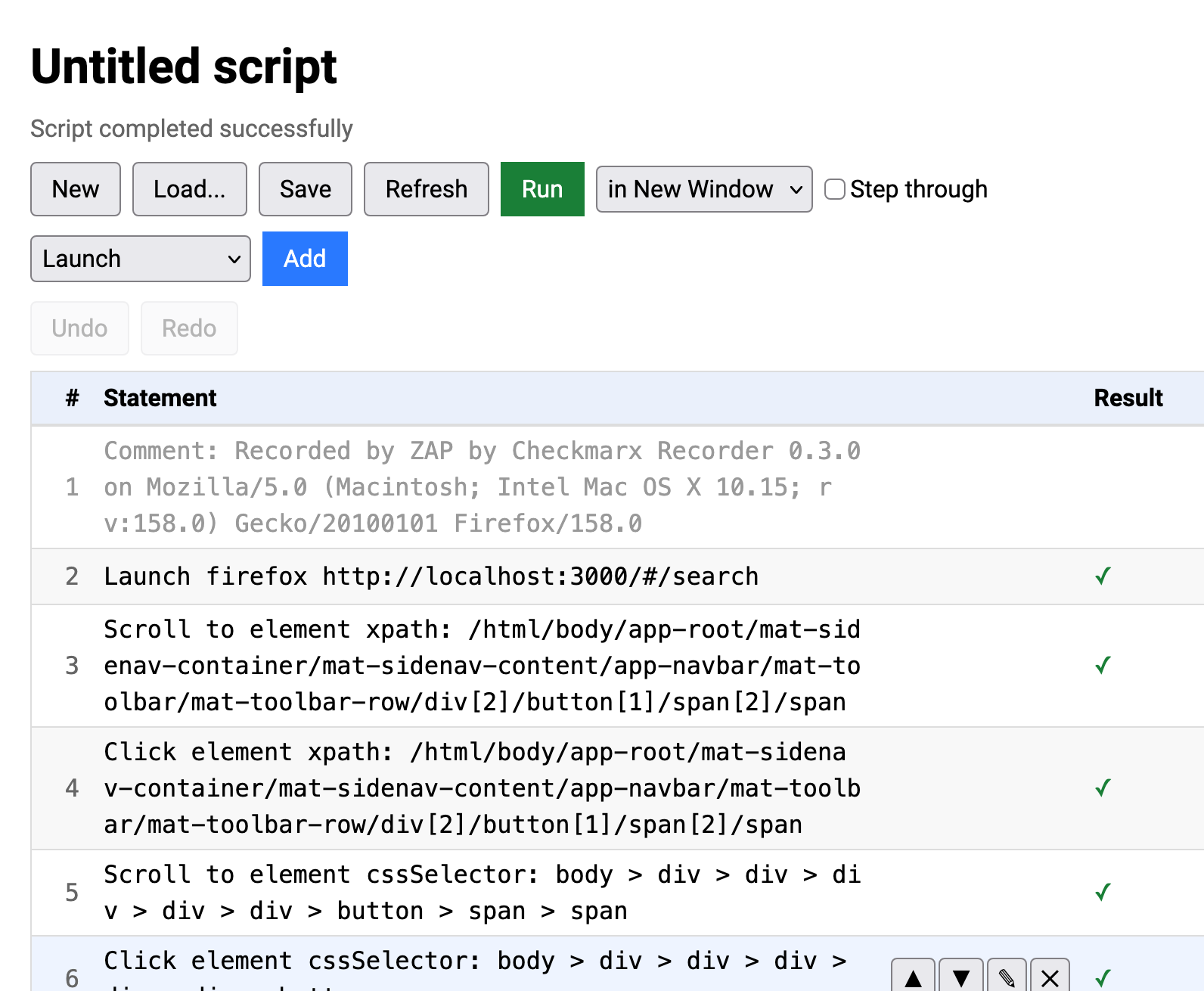
The ZAP Browser Extension (version 0.3.0) has a new Script Viewer. You can now see the Zest script you are recording as you record it, then edit it, replay it step by step, and load and save it, all without leaving the browser.
https://www.zaproxy.org/blog/2026-10-21-browser-extension-script-viewer/
#zaproxy #appsec

ZAPView, edit, and replay your recorded Zest scriptsThe ZAP Browser Extension (version 0.3.0) has a new Script Viewer. You can now see the Zest script you are recording as you record it, then edit it, replay it step by step, and load and save it, all without leaving the browser.
↩ Reply ♡ 0 · ↻ 0 ↗ Original

Modern connected-device regulations like the EU CRA, FDA guidance, and IEC 62443 all rest on a single baseline: knowing exactly what is inside your product. When supplier manifests are incomplete, binary analysis fills the gap. 🧩

Read Finite State's technical guide to learn how to generate binary-derived component inventories that stand up to regulatory scrutiny.

Big thanks to Finite State for supporting AppSec Village as a Silver Sponsor; we appreciate you!

Download the guide: https://finitestate.io/resources/firmware-binary-analysis-guide

#AppSec #CyberResilience #SupplyChainSecurity #DevSecOps

Media attachment
finitestate.ioFirmware Binary Analysis: The Complete GuideA source manifest lists what a developer meant to build. The shipped image is what you have to defend. A practitioner's guide to reading firmware from the binary up.
↩ Reply ♡ 0 · ↻ 0 ↗ Original

Firmware scanners can return tens of thousands of CVEs, but the EU Cyber Resilience Act (CRA) expects remediation decisions to be risk-based, proportionate, and documented.

How do you find the signal in the noise? 🔍

Our Silver Sponsor, Finite State, put together a practitioner's guide outlining a 5-step framework to filter out low-impact noise using CVSS, EPSS, and binary reachability.

Read the guide here: https://finitestate.io/resources/how-to-prioritize-firmware-vulnerabilities-cra-compliance

Thank you, Finite State, for your support this year!

#AppSec #CyberResilienceAct #FirmwareSecurity #VulnerabilityManagement #SBOM

Media attachment
finitestate.ioHow to Prioritize Firmware Vulnerabilities for CRA ComplianceCut 26,000 firmware CVEs to a defensible 47-item list. Learn the CVSS, EPSS, and reachability framework the EU Cyber Resilience Act actually requires.
↩ Reply ♡ 0 · ↻ 0 ↗ Original

Do you have any last minute question before the Open Security Conference? Check our FAQ, the answer might be in there already: https://opensecurityconference.org/faq/

Your point is not covered? Feel free to reach out :) https://opensecurityconference.org/contact/

We will soon send more information to all participants so you can prepare for the event. We're already looking forward to welcoming you!

#osco #osco26 #Security #CyberSecurity #InfoSec #AppSec [lisi]

Open Security ConferenceFAQWelcome to the Open Security Conference (osco), the people-centred international gathering for everyone interested in cybersecurity. Join us 5-8 November 2026 in Rückersbach, Germany.
↩ Reply ♡ 0 · ↻ 0 ↗ Original
T

🚨 17 CVEs across 12 AI agent frameworks — one disclosure wave, same three design failures.

6× CVSS 9.8 unauthenticated RCE:
- Piflow: POST /chat → exec_shell, no auth
- Langchain-Chatchat: /tools/call invokes shell tool, no auth
- DB-GPT: mock auth grants everyone admin
- Letta: compose.yaml omits LETTA_SERVER_SECURE, all routes open
- Cognition: no auth on REST/SSE API (fixed: 0.13.0)

5× 8.8: approval gates return True, unsandboxed python3, async sub-agents skip interrupt_on.

2× 8.3 IDOR: IBM Langflow OSS (fixed: 1.12.5), Coze Studio (fixed: 0.5.2).

7 products have no published fix. Put an auth proxy in front, bind DB ports to localhost, and rotate every secret in the execution environment.

https://threataft.com/articles/ai-agent-framework-rce-mega-cluster-17-cves

#InfoSec #AIAgent #LLM #RCE #CVE #AppSec

ThreatAftAI Agent RCE Cluster: 17 CVEs, Auth Defaults Off | ThreatAft17 AI agent framework CVEs in one disclosure wave: auth defaults off, sandboxing absent, approval gates bypassable. Full CVE list and fixes.
↩ Reply ♡ 0 · ↻ 0 ↗ Original

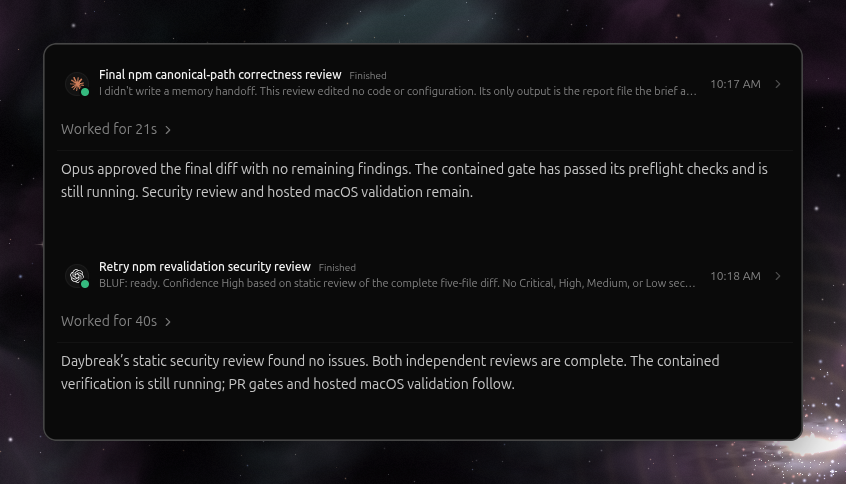
If you're not running routine security reviews of your PRs, you need to rethink your workflow. Use more than one model to review work and propose fixes.

Opus 5.5, Daybreak Blue, and GLM 5.3 are all excellent to use in tandem. Time to update your AGENTS.md.

Give each model a clear scope, ask for concrete failure cases and fixes, then verify the fixes before merging. Opus 5.5 is great for correctness and if you don't have access to Daybreak Blue, request it, and use GLM 5.3 in the meantime.

#InfoSec #AppSec #AISecurity

Two finished agent review tasks. 10:17 AM, correctness review: Opus approved the final diff with no remaining findings, while a contained gate is still running. 10:18 AM, security review: Daybreak's static review of the five-file diff found no Critical, High, Medium, or Low issues. Both independent reviews complete, with PR gates and macOS validation to follow.
↩ Reply ♡ 0 · ↻ 0 ↗ Original