
it being a race isnt new and not the issue
XFEDI
ActivityPubFederated
HELLO, FEDIVERSE
Good conversations travel.
Public updates from xsukax and this corner of the network.
Sign In to your accountPublic posts known to this server, including selected instances.

Frijoles Canyon was beautiful yesterday, all the various types of trees turning gold together. And the canyon itself is always spectacular.



Google Chrome Adds AI Scam Protection for More Than 1 Billion Users https://www.esecurityplanet.com/artificial-intelligence/news-google-chrome-ai-scam-protection-1-billion-users/
 eSecurity PlanetGoogle Chrome Adds AI Scam Protection for More Than 1 Billion UsersGoogle Chrome adds Gemini AI scam detection and ClickFix malware warnings, bringing new security protections to more than 1 billion users.
it was always a race

"Der zug rb *knarz* fällt heute aus. Grund ist eine vorübergehend verminderte Geschwindigkeit auf der Strecke"

🚨 INTERPOL-led cybercrime crackdown results in 1,462 arrests and the recovery of over $105 million
Law enforcement agencies from 21 countries carried out Operation Serengeti III between June 29 and August 31, targeting ransomware, business email compromise, online scams, digital extortion and other cyber-enabled fraud.
⠀
Authorities:
• Arrested 1,462 suspects
• Disrupted 10,909 malicious networks
• Identified 65,929 victims
• Recovered more than $105 million
• Linked the investigated activity to losses exceeding $385 million
⠀
In Uganda, police arrested 365 foreign nationals allegedly connected to investment and pension fraud rings targeting victims across Asia.
Operations elsewhere dismantled illegal cryptocurrency mining centers, phishing infrastructure, malicious loan apps and vehicle import scams.
Several investigations remain active as authorities continue tracing criminal proceeds and analyzing seized digital evidence.

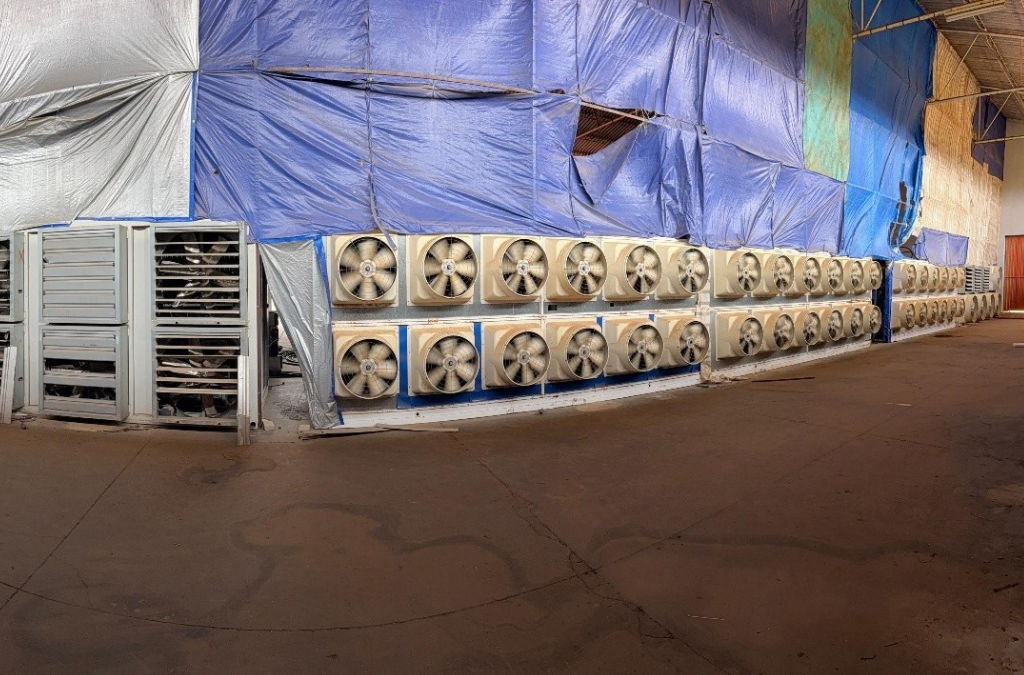
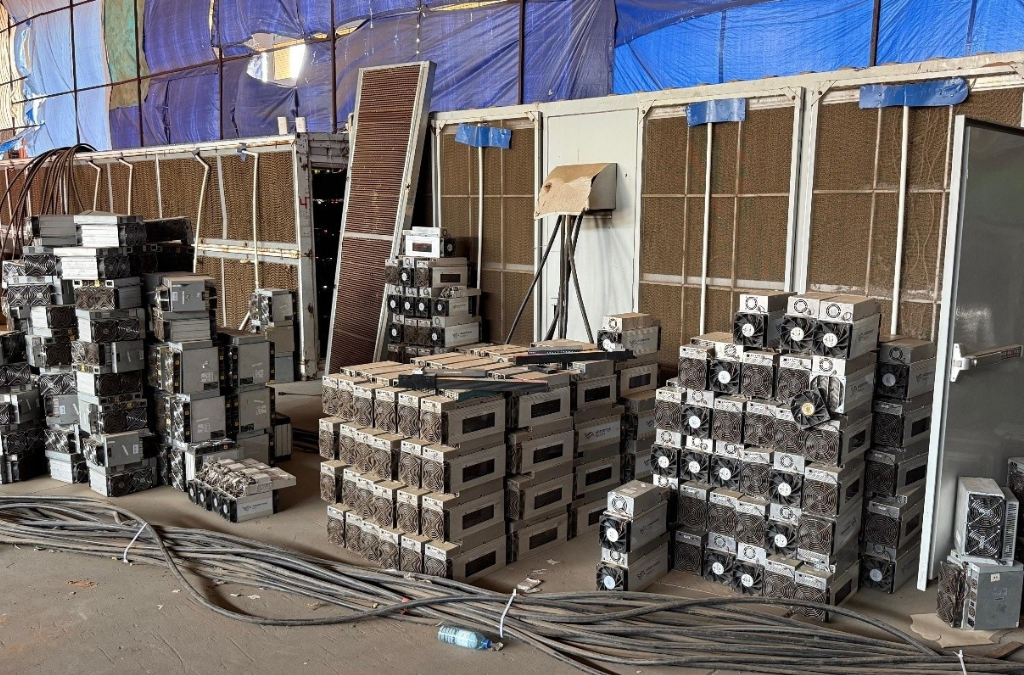 www.interpol.intCybercrime crackdown in Africa nets 1,462 arrests, recovers over USD 105 millionOperation Serengeti III dismantles thousands of malicious cyber networks

$ sudo snap install devpack-for-rust --classic
Ubuntu 26.10 distributes the latest developer toolchains from upstream, including Rust 1.97.1.
The Devpack for Rust snap brings a collection of tools to get started with Rust, including Rustup for toolchain management, an IDE of your choice, and a suite of command-line utilities.
Learn more: https://canonical.com/blog/canonical-releases-ubuntu-26-10-stonking-stingray
 CanonicalCanonical releases Ubuntu 26.10 Stonking Stingray | CanonicalUbuntu 26.10 Stonking Stingray is now available. The interim release previews privacy conscious speech-to-text, enables post-quantum package signing, and completes the rollout of Rust coreutils.

🐍📰 Supply Chain Security for the Age of AI-Speed Exploits
Learn Python supply chain security as AI speeds up attacks: what the LiteLLM backdoor teaches, how to check your setup, and habits that last
 Real PythonSupply Chain Security for the Age of AI-Speed Exploits – Real PythonLearn Python supply chain security as AI speeds up attacks: what the LiteLLM backdoor teaches, how to check your setup, and habits that last.

Im gesamten Home LAN wurde kein PHP Server gefunden..erstaunlich

Multiple unrelated folks I know are getting hit with a steady stream of Microsoft account reset attempts.

#meme #quote #difference #bigtech #economy #capitalism #Zuckerberg #CEO #company #power #fail #money #finance #society #nature #profit #responsibility #planet #earth #politics #climate #future #humanity #system #ethics #civilization #Fridaysforfuture #Fridays4future

🤖 Railway (PaaS) discloses an intrusion into systems storing customer environment variables. Encrypted vars may have been accessed, and in some cases decrypted. A subset of users is urged to rotate credentials and secrets.
🔗 https://thehackernews.com/2026/10/railway-says-intruder-may-have-accessed.html
#DataBreach #InfoSec #CloudSecurity #Secrets
 The Hacker NewsRailway Says Intruder May Have Accessed Customer Secrets, Urges Credential RotationRailway says an intruder may have accessed decrypted environment variables for some users, as a researcher reports related cryptocurrency theft.

#Frenemies, reverse harem, ethical #non-monogamy—whatever you're in to, as long as it's hot, you'll find it here.
https://books.bookfunnel.com/bfhostsmyconromoct/joknii6ril

 books.bookfunnel.comSales - Steamy Contemporary Romance - OctCLICK HERE FOR MOAR FREE, ARC & NEW RELEASE ROMANCES!


Remind me why I tend to ignore most technology journalism...
https://www.bbc.com/news/live/ckgel5xp2xv9t?post=asset%3A0157ff75-4be5-46d3-885e-ab9b14bbeb9a
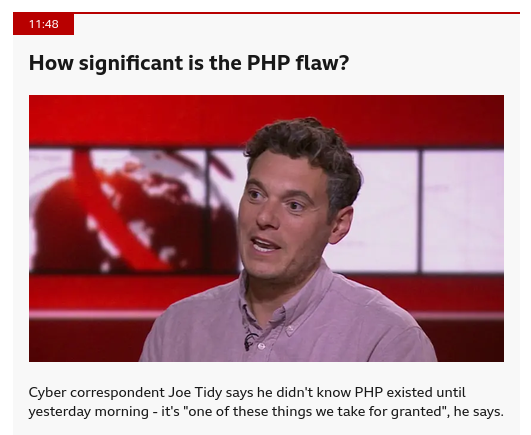
 BBC NewsPHP: Scale of cyber-security flaw 'unprecedented' but no sign of breaches, says expert - follow liveIn the UK, 32 government services are unavailable as security work takes place, but "this does not mean they were hacked", Downing Street says.

Trump ordered to answer questions under oath in BBC lawsuit https://www.bbc.co.uk/news/articles/cmy0ryjx7741o?at_medium=RSS&at_campaign=rss
 BBC NewsTrump ordered to answer questions under oath in BBC lawsuitTrump is suing the BBC over an episode of Panorama that edited together two different sections of a speech he gave in 2021.

⚠️ A severe vulnerability was disclosed for Cisco Emergency Responder and other products (CVE-2026-76478) https://vuldb.com/vuln/424903
A QPACK implementation flaw can turn a tiny HTTP/3 request into a serious memory exhaustion problem.
FoxIO’s Header Accordion research reports up to 4,064× memory amplification in Bun.
The key issue: compressed headers on the wire can expand into massive allocations during QPACK decompression.
A deep dive into the attack, affected implementations, CVEs, and mitigations:
https://thecybersecguru.com/exploits/qpack-header-accordion-http3-dos/
Content warning: QPACK Header Accordion attacks exploit HTTP/3 header compression to trigger memory exhaustion. Learn the affected libraries, CVEs, and mitigation steps
 The CyberSec GuruQPACK Header Accordion Attack: HTTP/3 DoS Explained | The CyberSec GuruQPACK Header Accordion attacks exploit HTTP/3 header compression to trigger memory exhaustion. Learn the affected libraries, CVEs, and mitigation steps

Proszę dodać w aplikacji ChatGPT na Androida możliwość zapisywania pojedynczych odpowiedzi do ulubionych lub przypinania ich wewnątrz rozmowy. Obecnie można przypiąć cały czat, ale nie konkretną odpowiedź. Przy długich rozmowach trudno wrócić do wybranych informacji. Przydałaby się zakładka „Ulubione odpowiedzi” z możliwością szybkiego przejścia do zapisanej wiadomości.

#NowPlaying #TheJimiHendrixExperience
#NationalColorDay 💜
https://open.spotify.com/track/6ahkC3EjRyZr6CUX8kB1Bl?si=yhc-GlhKQIWgMy5qXqDdug&utm_source=native-share-menu
 SpotifyPurple HazeJimi Hendrix · Smash Hits · Song · 2010

Unlocking Windows: Login Bypass and BitLocker Key Extraction with an FPGA USB Device We Built (Part 1: Hardware) https://packetstorm.news/news/view/46135 #news

📕LIBRISIMO #72 Clip 2 con Guillem López sobre el valor intrínseco de lo fantástico, en relación a LA POLILLA EN LA CASA DEL HUMO, reeditada por @edtransbordador

#Agama 25 is here! The #openSUSE installer now has a web-based terminal built right into the #UI. That's right, no more switching virtual consoles or SSH-ing in. Need a shell during install? Just open a tab. 💻 #Linux #OpenSource https://agama-project.github.io/blog/2026/10/21/agama-25
 agama-project.github.ioReleasing version 25 | AgamaAgama 25 is here, and while it does not carry any single headline feature, it bundles a handful of

16-year-old Malaysian student attacks his teacher with axe https://www.aljazeera.com/video/newsfeed/2026/10/22/16-year-old-malaysian-student-attacks-his-teacher-with-axe?traffic_source=rss
 Al Jazeera16-year-old Malaysian student attacks his teacher with axeA 16-year-old Malaysian student attacked his teacher and fellow school pupils with an axe.

rainy day today until 9pm

The Ladoga Canal in northwestern #Russia was finished OTD in 1730 https://cromwell-intl.com/travel/russia/sankt-peterburg.html?s=mb #travel #history
 Bob's Pages of Travel, Linux, Cybersecurity, and MoreTraveling and Working in Russia — Around Sankt-PeterburgThe Neva, the Hermitage, a trip to a dacha in the birch forest, and hanging out in the neighborhood around the hospital.

Advogada de Flávio recebeu R$ 33 milhões de fundo sem dono identificado
Maria Cláudia Bucchianeri, chefe jurídica da campanha de Flávio, também emitiu notas de R$ 27 milhões no dia que Vorcaro comprou Itaminas
 MetrópolesAdvogada de Flávio recebeu R$ 33 milhões de fundo sem dono identificadoMaria Cláudia Bucchianeri, chefe jurídica da campanha de Flávio, também emitiu notas de R$ 27 milhões no dia que Vorcaro comprou Itaminas

— ‘Amazon Threat Intelligence, another cybersecurity company, said PHP2Shell, as the vulnerability is known, was “now being broadly exploited in the wild” and it had identified several attempts from multiple actors to test ways to capitalise on the vulnerability before the fix was released by the PHP developers on Wednesday.
CloudFlare also said that in the 10 hours before the vulnerability was publicly announced, it saw thousands of attempts to exploit it, amid concern over the handling of the alert. One cybersecurity expert, Prof Alan Woodward, said the flaw was revealed a day before the patch was released, and that “somebody let the cat out of the bag”.’
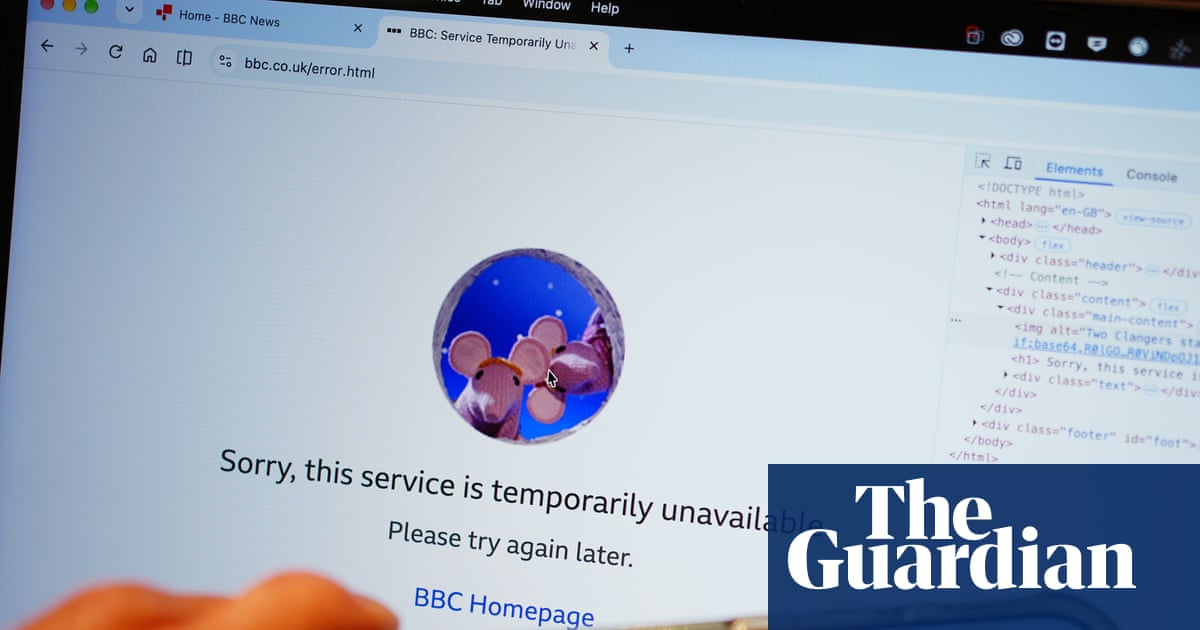 the GuardianWebsites across world hit by millions of attempts to exploit PHP code flawProblem in language that underpins 70% of sites has led governments and companies to pull sites offline to patch fault

QPACK Header Accordion attacks exploit HTTP/3 header compression to trigger memory exhaustion. Learn the affected libraries, CVEs, and mitigation steps Show content
HTTP/3 moves web traffic off TCP and onto QUIC, which runs over UDP. QUIC removes transport-level head-of-line blocking, builds in TLS 1.3, and brings faster connection setup, better delivery on unstable networks, and connection migration. It also brings new state management problems, especially in how application-layer metadata is compressed, sent, and processed.
On October 20, 2026, security research firm FoxIO published an analysis by researcher Sébastien Féry on a class of denial-of-service bugs called “Header Accordions”. A single unauthenticated HTTP/3 connection can make a server allocate thousands of times more memory than the client sent, ending in resource exhaustion, process termination, or sustained CPU lockups. Neither the cryptography nor the QPACK specification is at fault. Major implementations failed to enforce resource limits during the decompression phase.
How HTTP/3, QUIC, and QPACK fit togetherHTTP/3 communication has three layers. QUIC runs at the transport layer and provides reliable, encrypted streams over UDP. HTTP/3 sits on top and defines the application-level framing, including HEADERS and DATA frames. QPACK, specified in RFC 9204, compresses the headers.
QPACK exists because HPACK, the HTTP/2 scheme, assumes TCP’s ordering. Under QUIC, a lost packet carrying a dynamic table update would stall header decompression across every stream, which recreates the head-of-line blocking QUIC was built to remove. QPACK avoids this by moving encoder and decoder instructions onto dedicated unidirectional streams, so compression state evolves independently of the requests themselves.
A QPACK decoder keeps a static table of well-known header fields and a dynamic table of entries specific to the connection. A client does not send the full text of headers like User-Agent or Accept-Encoding. It sends compact integer indexes or Huffman-encoded literals, and the server’s decoder rebuilds the field list. This helps performance, and it also changes the trust boundary between the wire format and the server’s memory.
FoxIO’s research exposes one bad assumption: that the size of a compressed payload tracks the memory needed to process it. In Go, Rust, or Python, a header is rarely stored as raw bytes. It ends up in a hash map, a dictionary, or a vector of string objects, and each of those carries overhead. A Go string needs a pointer to the underlying byte array plus a length. A hash map entry needs memory for the key, the value, the hash seed, and the pointers used to navigate buckets.
The network stack sees only the compressed byte count. If the server’s security controls measure only the incoming frame size, an attacker can exploit the gap between the wire format and the heap allocation. A malicious client can build a QPACK block that references one moderately sized dynamic table entry thousands of times. Each reference costs a few bytes on the wire, but the application may instantiate a new string object or map entry for every one.
FoxIO measured amplification of roughly 4,064-to-one against Bun’s HTTP/3 server. Just 5.8 megabytes of transmitted data was enough to trigger resource exhaustion in a two-gigabyte container. At that ratio, a bandwidth-saving optimization works as a denial-of-service vector.
RFC 9114 field section size and the 32-byte overhead ruleThe HTTP/3 authors anticipated header expansion. Section 4.2.2 of RFC 9114 requires an implementation to limit the maximum message header size it will accept, and it gives a formula for calculating that size. A field section is measured by the uncompressed length of each field’s name and value, plus a mandatory 32 bytes per field:
📬 Stay Ahead of Cyber ThreatsGet the latest cybersecurity news, critical vulnerabilities, threat intelligence, tutorials, and exclusive giveaways delivered straight to your inbox. No spam. Unsubscribe anytime.
Subscribe to the Newsletter →The 32-byte constant is a standardized proxy for the structural overhead of typical language data structures. Take a request with ten thousand headers, each with a one-byte name and a one-byte value. The raw text is only twenty thousand bytes, but the formula gives 340,000, because the overhead is applied ten thousand times. The rule protects against death by a thousand cuts, where an attacker sends millions of tiny headers to overwhelm the hash map allocator or the garbage collector.
The SETTINGS_MAX_FIELD_SECTION_SIZE parameter lets endpoints negotiate this limit during the handshake. As the FoxIO research shows, advertising a limit does nothing if the decoder fails to enforce it inside the parsing loop.
Féry’s research groups the exploitation into two vectors. Both use valid QPACK instructions to get past naive security checks.
Vector 1: floods of unique literal headersThe first vector sends a huge number of unique, literal headers. The attacker packs hundreds of thousands of distinct, small header fields into one highly compressed block, and Huffman coding keeps them compact on the wire. The server’s decoder must allocate memory for every unique string and insert it into the application’s header map.
FoxIO showed that a single one-megabyte compressed block could force the Go-based quic-go library to retain about fifteen megabytes of live heap after garbage collection. A 15x ratio looks manageable alone, but an attacker can open hundreds of concurrent QUIC connections, each delivering a payload tuned for maximum allocator pressure and garbage collection latency.
Vector 2: dynamic table referencesThe second vector is considerably worse. The attacker first uses QPACK encoder instructions to insert a large string, perhaps four kilobytes of arbitrary data, into the server’s dynamic table. Then the attacker sends a HEADERS frame made entirely of indexed references to that one entry. The frame is tiny, often a few hundred bytes, because it holds only the integer index.
A vulnerable decoder follows every reference and builds a long list of decoded fields. If the application iterates over those headers or copies them into a request context, the server allocates four kilobytes for each reference. That is how Bun reached its 4,000-fold amplification, and it lets the attacker dictate the server’s memory use with microscopic network payloads. The underlying mistake is conflating table capacity with field section size. The dynamic table limits the state used for compression, but it puts no cap on the cumulative size of the request produced by referencing that state repeatedly.
Affected HTTP/3 implementations and CVEsHeader Accordions are not one bug. They are a spread of implementation errors that end in the same outage.
quic-go (CVE-2025-64702)quic-go powers infrastructure tools like Caddy, Traefik, and cloudflared. It enforced limits on the size of the incoming compressed HEADERS frame but never measured the cumulative size of the decoded field section. The result was CVE-2025-64702: the decoder allocated unbounded memory as long as the initial packet stayed under the configured threshold. Go’s garbage collector handles short-lived allocations well, but it struggles when hundreds of thousands of live, reachable string pointers sit inside complex map structures.
The fix arrived in version 0.57.0. The maintainers rewrote the decoding loop to track the RFC 9114 field size incrementally and abort the stream with an HTTP 431 error the moment the budget is exceeded. Allocations are stopped in advance instead of cleaned up afterward.
Cloudflare quiche (CVE-2026-12523)Cloudflare’s quiche library, written in Rust, failed in a more complicated way under CVE-2026-12523. Besides QPACK decompression limits, it had a parser flaw that pre-allocated memory based on a declared frame length before the full payload had arrived. QUIC frames can be fragmented across packets, so an attacker could start a HEADERS frame, declare a massive length in the frame header, and then send the payload very slowly or not at all. The vulnerable parser immediately reserved a contiguous block of virtual memory matching the declared length. That quickly exhausted the system’s memory map and triggered out-of-memory kills at the operating system level.
Version 0.29.3 restructured the parser’s memory management. It replaced eager pre-allocation with incremental, bounds-checked buffer growth that commits physical memory only as bytes are validated and decoded.
Bun and the signed integer overflowBun is probably the most alarming case. It uses the lsquic library but replaces the upstream header-handling logic with its own implementation. According to FoxIO, Bun’s custom handler checked the size of individual headers but kept no running total of the decoded field section.
That led to an integer overflow. Once the accumulated decoded header size passed the maximum value of a signed 32-bit integer (about 2.14 gigabytes), the internal counter wrapped to a negative value or zero, depending on the type casting involved. The wrapped counter bypassed the later boundary checks and trapped the server’s event loop in a non-terminating state that held one CPU core at 100 percent. The lesson is that downstream wrappers which bypass upstream parsing logic inherit the full burden of protocol security, and custom implementations rarely get the adversarial testing that foundational libraries do.
Wireshark (CVE-2025-13945)The threat also reaches analysis tools. Wireshark was vulnerable to a related QPACK decoding flaw, tracked as CVE-2025-13945. Wireshark processes captured PCAP files, often with TLS key-log files to decrypt QUIC payloads after the fact. When an analyst opens a capture containing a crafted QPACK stream, the HTTP/3 dissector tries to rebuild the headers for display. The sheer number of decoded objects in a Header Accordion payload makes the dissector’s internal tree structures balloon until the host runs out of RAM and the application freezes or crashes. A debugging artifact ends up attacking the researcher who is trying to analyze it.
Wireshark fixed this in versions 4.6.2 and 4.4.12 with strict decoding budgets and hard limits on dissector tree depth.
How to build a QPACK decoder that resists header amplificationValidating a payload after it has been fully received and decoded does not work for compression protocols. A secure QPACK decoder needs incremental accounting: it evaluates the cost of every instruction before committing anything to memory. When it meets an indexed field representation, it calculates the logical size of the referenced entry, adds the 32-byte RFC 9114 overhead, and checks the new total against the configured SETTINGS_MAX_FIELD_SECTION_SIZE. If the addition would exceed the limit, the decoder rejects the field, terminates the stream, and releases any partially allocated resources.
Arithmetic in resource counters is a security boundary. Bun’s overflow shows what naive addition costs. A safe decoder checks whether the remaining budget can hold the next field before performing the addition, which rules out wrap-around regardless of the integer width the host language uses.
Limits must also apply uniformly to every QPACK representation type. A common mistake is to count literal header fields carefully while treating dynamic table references as free because the string data already exists in the table. The table entry may consume memory only once, but the application-layer representation of that field in a given request still has structural costs that need accounting.
Finally, robust implementations need backpressure to handle slow-loris style variants of the attack. lsquic addressed this in version 4.9.0 by limiting the number of unpacked header sets a server retains per stream and pausing parsing until the application drains the buffered data. A fast sender then cannot overwhelm a slow consumer, and decoded state does not pile up in the library’s internal queues. Backpressure only works when the producer is barred from creating unbounded buffered work while the consumer falls behind.
Detecting Header Accordion attacksDetection is hard. The attack uses entirely valid, specification-compliant QPACK instructions, so it produces no malformed packets and no anomalies at the TCP or UDP layer. Web Application Firewalls and Intrusion Detection Systems that rely on signature matching or protocol violation heuristics will usually pass this traffic straight to the backend HTTP/3 server. The malicious intent shows up only in the ratio of network ingress to internal memory allocation.
Monitoring therefore has to move from the network perimeter to the application runtime. Operators should baseline HTTP/3 connection memory footprints and alert on abnormal spikes in heap allocation, garbage collection frequency, or CPU utilization correlated with QUIC listener ports. Where dependency mapping is opaque, as in containerized microservices or managed edge proxies, security teams should inventory the QUIC libraries actually in use. A product can advertise itself as a secure edge gateway and still embed an unpatched version of quic-go or Rust h3.
Upgrade to the patched versions: quic-go 0.57.0, quiche 0.29.3, and lsquic 4.9.0. Network-level rate limiting is a weak substitute, because an attacker can spread the attack across a botnet of low-bandwidth connections. Rate limits that constrain new connections or excessive resource use from a single source still add some protection, but they do not replace a properly bounded decoder.
Where no patch exists yet, as with Bun or certain Python-based aioquic deployments, the only reliable mitigation is to disable HTTP/3 on public-facing interfaces. For tools like mitmproxy, setting the configuration flag that disables HTTP/3 stops the vulnerable QPACK decoder from ever being instantiated. You lose the latency and performance benefits of QUIC, but you keep the infrastructure available until the vendors catch up with the FoxIO disclosure.
What Header Accordions mean for HTTP/3 securityHeader Accordions show that moving from TCP to QUIC does not protect applications from resource exhaustion. It only changes the layer where the attack lands. QPACK’s efficiency gains are real, and they create an asymmetry that attackers will use. RFC 9114 and RFC 9204 give implementers the rules for safe operation, but the rules only help if the code enforces them. Resource limits belong in the decoder’s core execution loop, not in optional configuration or a validation step that runs after the memory is already spent.

 The CyberSec GuruNewsletter Subscription | The CyberSec GuruStay Updated with The CyberSec Guru! Join Our Community of Cyber Enthusiasts! Subscribe to our newsletter to never miss a beat in cybersecurity
The Biased British Broadcasting Corporation, aka the BBBC, is trying to get a fee imposed on Internet Services, including YouTube, Netflix and Amazon Prime, if you don't think this is a good idea, say so here at Change.org
https://c.org/2GnPrhZdGX