Missing a statutory deadline is one of the most expensive mistakes a business can make. Interest, penalties, notices, and employee distrust can all follow a single missed payment or a wrong calculation.
What is payroll statutory compliance?
Payroll statutory compliance means meeting every legal obligation linked to employee pay: correct deductions, timely deposits, accurate returns, and proper records. In India, these obligations come from both central and state laws.
Key payroll compliances in India
1. Provident Fund (PF)
Employer and employee contributions, generally 12% each of the PF wage for covered employees, deposited monthly, usually by the 15th of the following month.
2. Employees' State Insurance (ESI)
Covers eligible employees within the notified wage limit. Contributions are deposited monthly, usually by the 15th of the following month.
3. Professional Tax (PT)
A state-level tax with different slabs and due dates in each state that levies it.
4. Labour Welfare Fund (LWF)
State-specific contributions by employers and employees, often half-yearly or annual.
5. TDS on salary
Tax deducted monthly under the employee's chosen regime, deposited on time, reported in quarterly returns, and summarised in an annual certificate for each employee.
6. Gratuity and bonus
Gratuity for eligible exits and statutory bonus for eligible employees, now governed by the Labour Codes.
7. Registers and records
Attendance, wage, and other statutory registers ready for inspection.
What has changed recently
- The four Labour Codes, in force since November 2025, introduced a uniform wage definition that affects PF, gratuity, and take-home pay
- The Income-tax Act, 2025 applies from 1 April 2026, with new form numbers from Tax Year 2026-27
Best practices
- Keep a monthly and annual compliance calendar
- Configure state rules by each employee's work location
- Reconcile deposits with payroll every month
- Keep challans, returns, and registers organised
- Review salary structures and tax setup when laws change
How QkrHR helps
- PF, ESI, Professional Tax for all 18 states, LWF, and TDS under both regimes
- Challans and returns, Form 24Q and Form 16, and a statutory register pack
- Contract labour management and registers for businesses that use contract workers
- Statutory compliance is included in every QkrHR plan, with no extra compliance add-on
The bottom line
Payroll compliance is not optional, and it is not simple. With a clear calendar and a payroll system that handles statutory rules for you, every deadline becomes routine instead of a risk.
This post is general information. Please confirm rates and due dates with your compliance advisor.
Read the full explanation: https://www.qkrbiz.com/payroll-software/statutory-compliance
Book a free demo: https://www.qkrbiz.com/signup
#StatutoryCompliance #PayrollCompliance #PFandESI #HRIndia #QkrHR
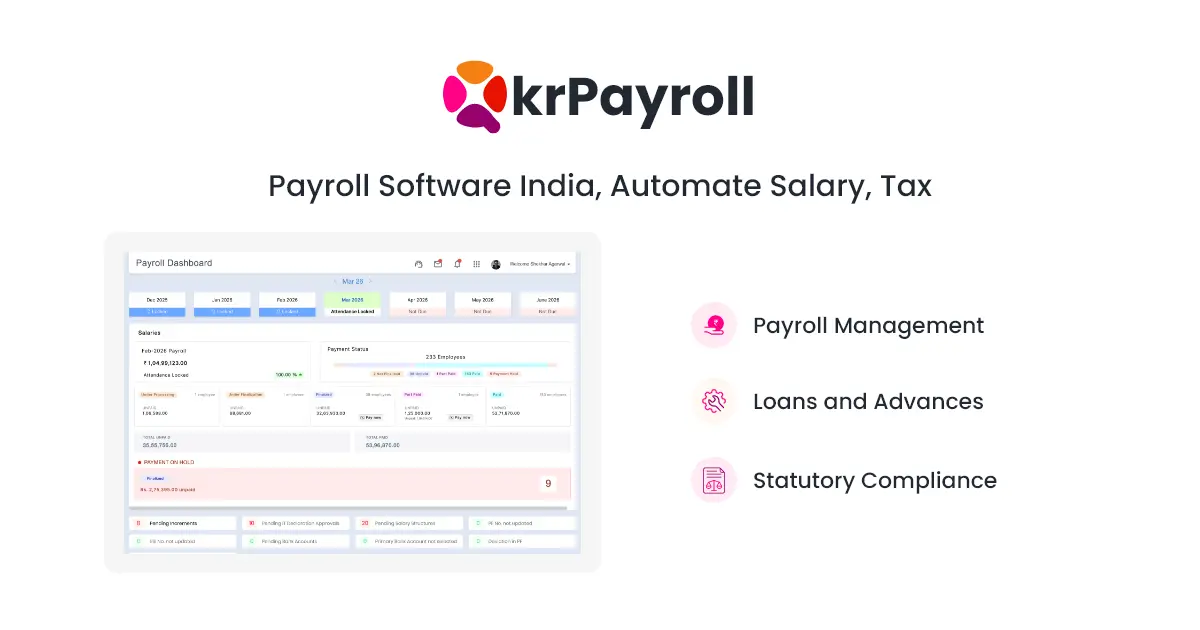 QkrbizPayroll Statutory Compliance Software | PF, ESI, TDS | QkrPayrollQkrPayroll automates all Indian payroll statutory compliance – PF, ESI, TDS, PT & LWF. Challans, returns & Form 16 auto-generated. Always audit-ready. Free demo.