X XFediYour place in the Fediverse
XFEDI

Conversation

ActivityPub
↳ In reply to a post

The NSF NOIRLab website has additional info, images and videos on Dwarf Planet candidate 2026 ED138.
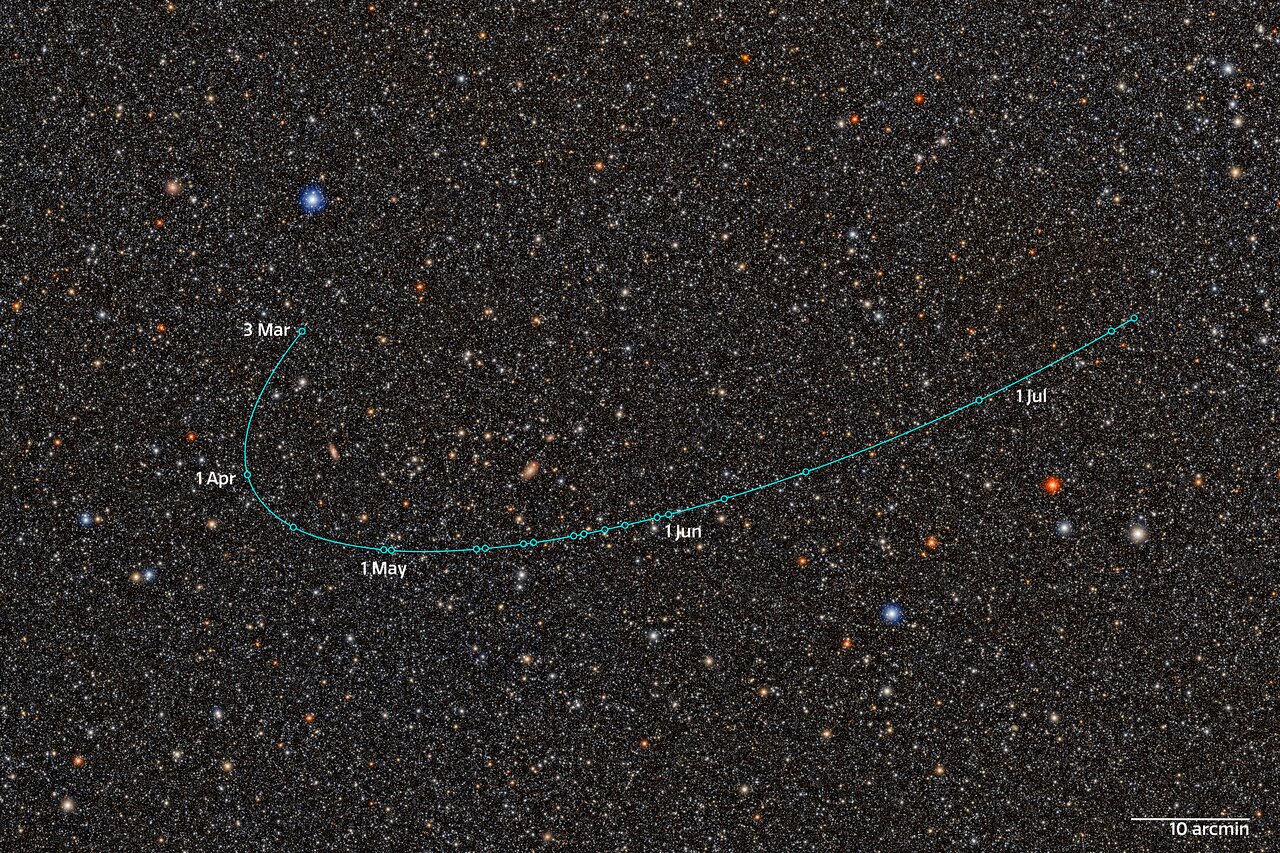
https://noirlab.edu/public/news/noirlab2626/?lang=en
3/n

www.noirlab.eduNSF–DOE Vera C. Rubin Observatory Reveals Its First Dwarf Planet Candidate in Our Solar System - The candidate orbits our Sun beyond Pluto, and may be among the largest and brighteIn the outer reaches of our Solar System, beyond the orbit of Pluto, NSF–DOE Vera C. Rubin Observatory has spotted 2026 ED138 — a large, bright trans-Neptunian object that scientists have identified as a dwarf planet candidate. The observations were announced today by the International Astronomical Union Minor Planet Center (MPC). If confirmed, ED138 would be among the largest dwarf planets ever d
↩ Reply ♡ 0 · ↻ 0 ↗ Original

Oct 27, 2026 · 22:40 UTC · Edited Oct 27, 2026 · 22:40 UTC

Replies
↳ In reply to a post

Check out these earlier threads for more info on the venerable Vera C. Rubin Observatory, located on Cerro Pachón in Chile, with its 3.2 gigapixel wide-angle camera.

The observatory is named after astronomer Vera Rubin, who provided the first convincing evidence for the existence of dark matter.

https://fosstodon.org/@AkaSci/114150485502312076
https://fosstodon.org/@AkaSci/114731082323927544
4/n

❞ Quoted postAkaSci 🛰️

The focal plane of the Vera C. Rubin telescope consists of 189 4kx4k charge-coupled device (CCD) sensors, arranged in a total of 21 3-by-3 square arrays. The system is cooled to about -100 °C to minimize noise. The 3.5° field of view of the 64 cm wide array is 40 times the area o

1. Pic othe LSST camera focal plane and detectors during assembly and testing
Credit: Jacqueline Orrell/SLAC National Accelerator Laboratory
Source: https://www.flickr.com/photos/slaclab/50212763208/

2. Schematic of LSST focal plane and detectors
Source: https://www6.slac.stanford.edu/lsst
FosstodonAkaSci 🛰️ (@[email protected])Attached: 1 image The focal plane of the Vera C. Rubin telescope consists of 189 4kx4k charge-coupled device (CCD) sensors, arranged in a total of 21 3-by-3 square arrays. The system is cooled to about -100 °C to minimize noise. The 3.5° field of view of the 64 cm wide array is 40 times the area of the full moon in the sky. Camera Data Rates: ~3.2 GBytes/sec peak raw data 😲 1 pixel = 16 bits (r
↩ Reply ♡ 0 · ↻ 0 ↗ Original