
🚨 This time the bug isn’t in your code, it’s in PHP itself.
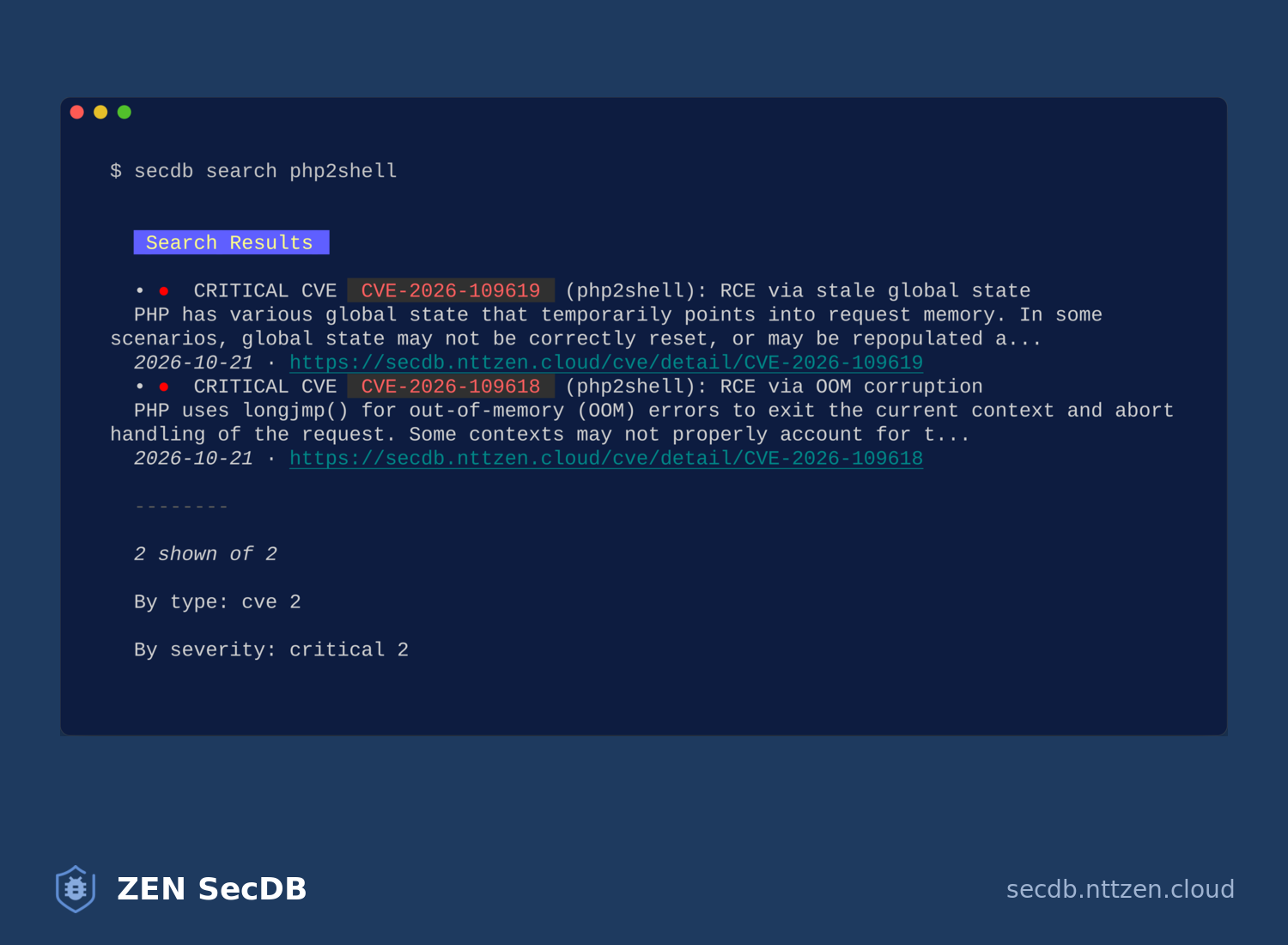
PHP2Shell is two CVEs in the PHP runtime (CVE-2026-109618, CVE-2026-109619) that can lead to unauthenticated RCE.
When something like this lands, the first question is usually: what exactly is affected, and what do I need to patch?
I’d rather answer that from the terminal than from twelve browser tabs.
With the ZEN SecDB CLI:
1️⃣ secdb search php2shell
finds both CVEs.
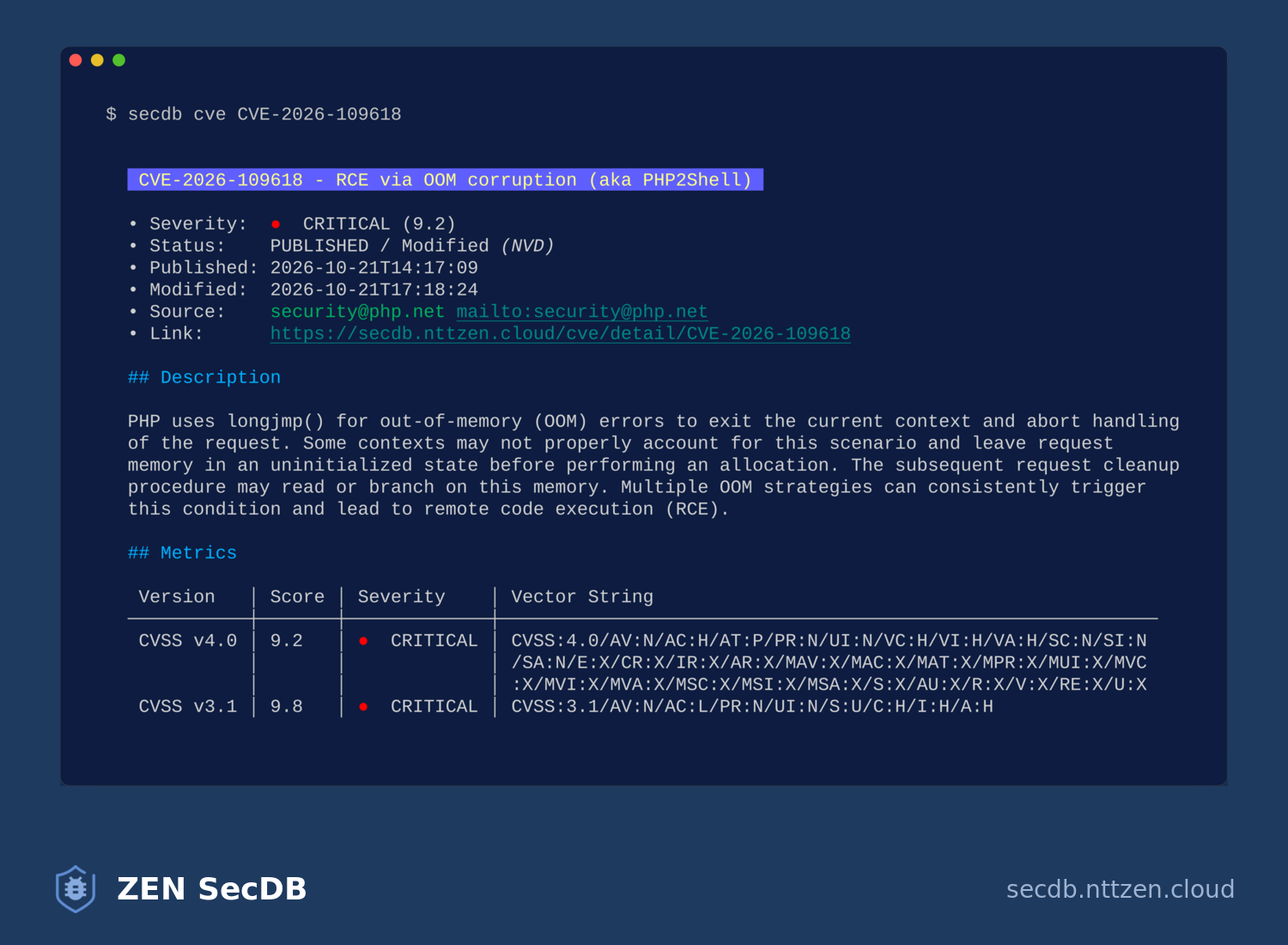
2️⃣ secdb cve CVE-2026-109618
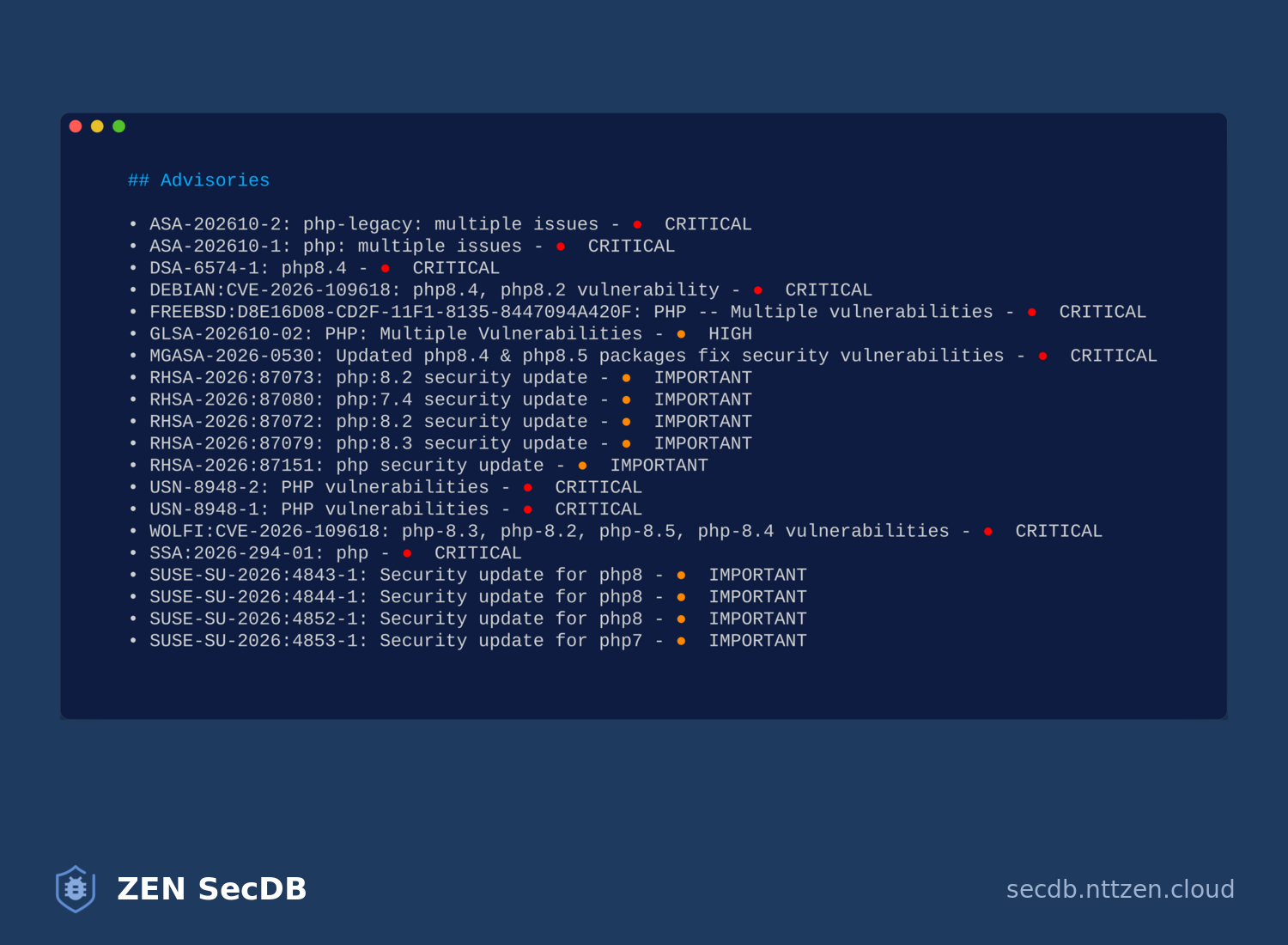
gives the full record: description, CVSS 4.0 at 9.2, CVSS 3.1 at 9.8, vectors, references and vendor advisories from Debian, Red Hat, SUSE, Ubuntu, Arch, Gentoo, FreeBSD and others.
That’s useful because you can quickly check whether your distro already ships a fix, instead of going through each security tracker manually.
If you run PHP, upgrade to 8.5.12, 8.4.27, 8.3.36 or 8.2.35, or use the patched package provided by your distro.
Configuration mitigations may reduce the risk, but they don’t replace patching.
And if the server was exposed, it’s probably worth checking whether it was already compromised.
ZEN SecDB: https://secdb.nttzen.cloud
CLI: https://github.com/giterlizzi/secdb-cli
CVE-2026-109618: https://secdb.nttzen.cloud/cve/detail/CVE-2026-109618
CVE-2026-109619: https://secdb.nttzen.cloud/cve/detail/CVE-2026-109619
#PHP2Shell #PHP #RCE #InfoSec #VulnerabilityManagement #CVE
#NTTDATA #ZENSecDB
 ZEN SecDB PortalHome | ZEN SecDB Portalpowered by YaVS - YaVS Ain't Vulnerability Scanner...