
X XFediYour place in the Fediverse
XFEDI

Conversation

ActivityPub
↳ In reply to a post

I am pretty sure that the Digital Objects we used in the aDORe repo (2003-2006) had all core characteristics of FAIR DOs, including operations and the creation of a new DO in case of meaningful changes, with standards-based access protocols to top it off, see https://arxiv.org/abs/cs/0502028v1, https://doi.org/10.1045/november2003-bekaert, and https://doi.org/10.1045/february2004-bekaert.

2/3
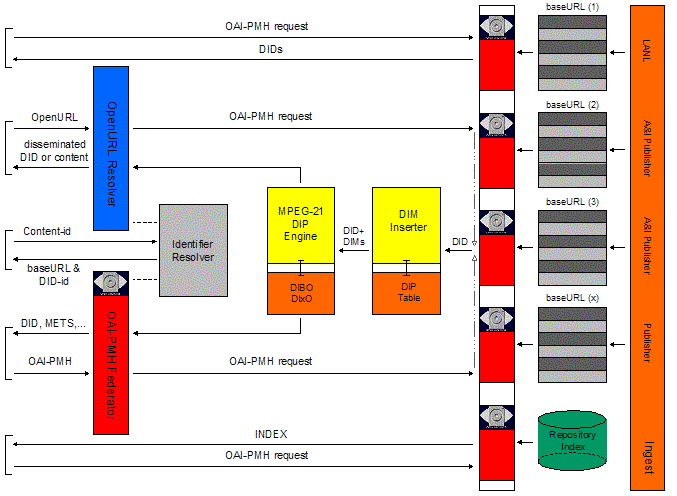
Access/Dissemination mechanisms for Digital Objects in the aDORe architecture.
arXiv.orgaDORe: a modular, standards-based Digital Object RepositoryThis paper describes the aDORe repository architecture, designed and implemented for ingesting, storing, and accessing a vast collection of Digital Objects at the Research Library of the Los Alamos National Laboratory. The aDORe architecture is highly modular and standards-based. In the architecture, the MPEG-21 Digital Item Declaration Language is used as the XML-based format to represent Digital

↩ Reply ♡ 0 · ↻ 0 ↗ Original

Oct 24, 2026 · 07:57 UTC

Replies
↳ In reply to a post

FAIR Signposting (2016-) is an HTTP-based simplistic interpretation of FAIR DOs focusing on features that are realistically implementable at scale, see https://signposting.org/FAIR/. For example, it relies on typed links to group DO components and relies on media types (https://www.iana.org/assignments/media-types) to associate operations with DO content; no special purpose registries. Adoption is steadily growing and major repository platforms have already implemented support, see https://signposting.org/adopters/.

3/3

FAIR Signposting logo shows a mountainous landscape with signposts that have link relation types on them. Image by Patrick Hochstenbach.
signposting.orgFAIR Signposting Profile - Signposting the Scholarly Web
↩ Reply ♡ 0 · ↻ 0 ↗ Original