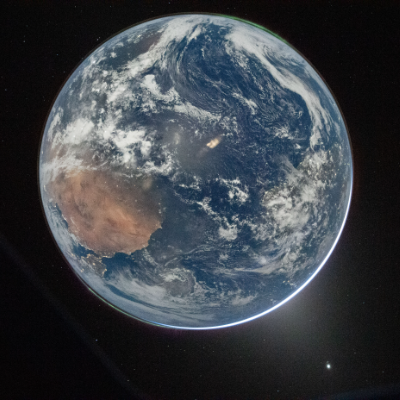
🌌 NASA APOD: The Horns of Venus
Public posts with this hashtag.
🌌 NASA APOD: The Horns of Venus
🌌 NASA APOD: The Horns of Venus
OpenMBEE: Der lange Weg von der NASA’s JPL zu Kotar
Kotar ist ein kostenloser SysML-v2-Editor, der im Browser läuft. Mein erster Eindruck: Extrem beeindruckend. Insbesondere steckt wesentlich mehr als nur ein Editor allerdings: ein SysML-v2-Service, ein Model Management System namens Flexo und eine RDF-Date
https://www.se-trends.de/openmbee-der-lange-weg-von-der-nasa-zu-kotar/
#LuftRaumfahrt #Menschen #ModellierungMBSE #OpenSource #Organisationen #Werkzeuge #JPL #Kotar #NASA #OpenMBEE

 Systems Engineering TrendsOpenMBEE: Der lange Weg von der NASA's JPL zu Kotar - Systems Engineering TrendsKotar ist ein kostenloser SysML-v2-Editor, der im Browser läuft. Mein erster Eindruck: Extrem beeindruckend. Insbesondere steckt wesentlich mehr als nur
Topic> Venus
October 29, 2026
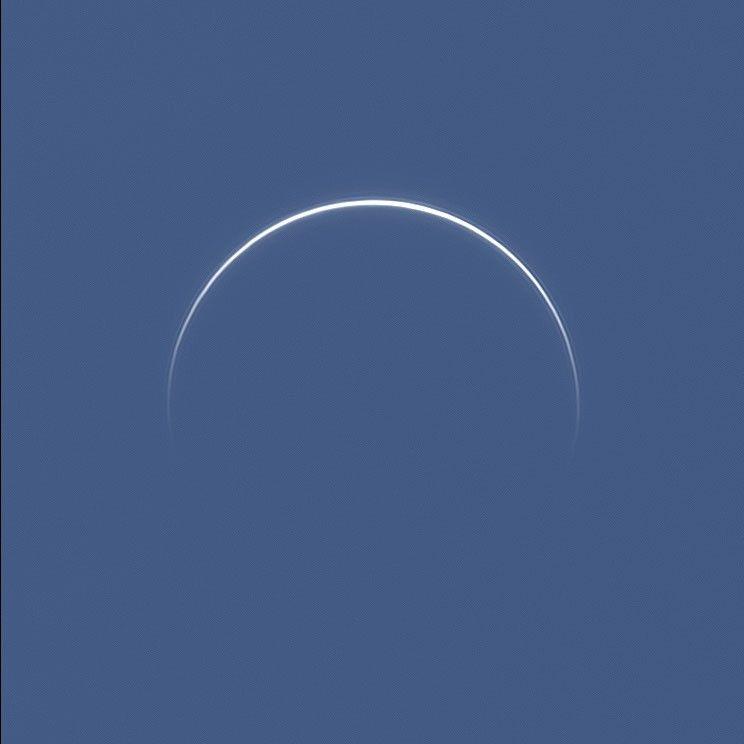
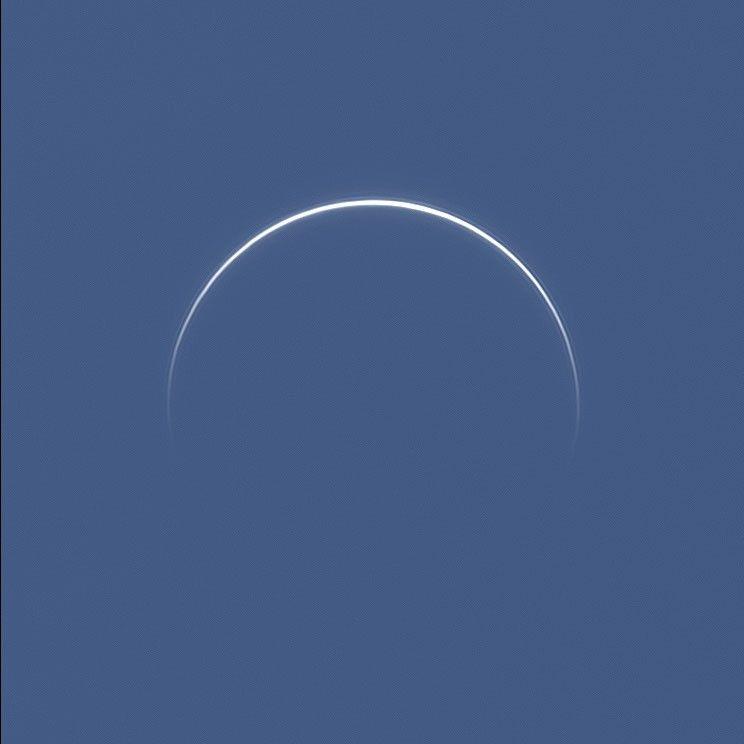
The Horns of Venus
* Credit & Copyright: Thierry Legault
http://www.astrophoto.fr/
* Text: Cecilia Chirenti
Explanation:
That's no moon. But you could be forgiven for thinking it was a crescent Moon in the sky. It is a lesser known fact that Venus also has phases. (What about other planets?) The featured image shows Venus seen almost directly between the Sun and the Earth. This happens once every year and a half, and it is like the alignment that happens every month during a new Moon. But the new Moon is dark, while Venus' backlit atmosphere refracts and scatters the sunlight, creating a glowing crescent arc that extends beyond 180 degrees: the tips of this arc are called the "horns". The crescent can be seen with a small telescope or binoculars during twilight, but those with exceptionally acute eyesight may be able to see it with the unaided eye. Ancient Babylonian astronomers may have been the first to study Venus' brightness changes, which are related to its phases. Many other cultures have similar astronomical records, including the oldest surviving Maya book.
https://science.nasa.gov/image-article/apod-29-october-2026-the-horns-of-venus/
#space #mars #sun #venus #astrophotography #photography #science #astronomy #nature #NASA #physics

 NASA ScienceAPOD: 29 October 2026 - The Horns of Venus - NASA Science
Roverul Perseverance al 🚀#NASA a detectat cele mai mici particule de praf observate până acum pe 🪐#Marte.
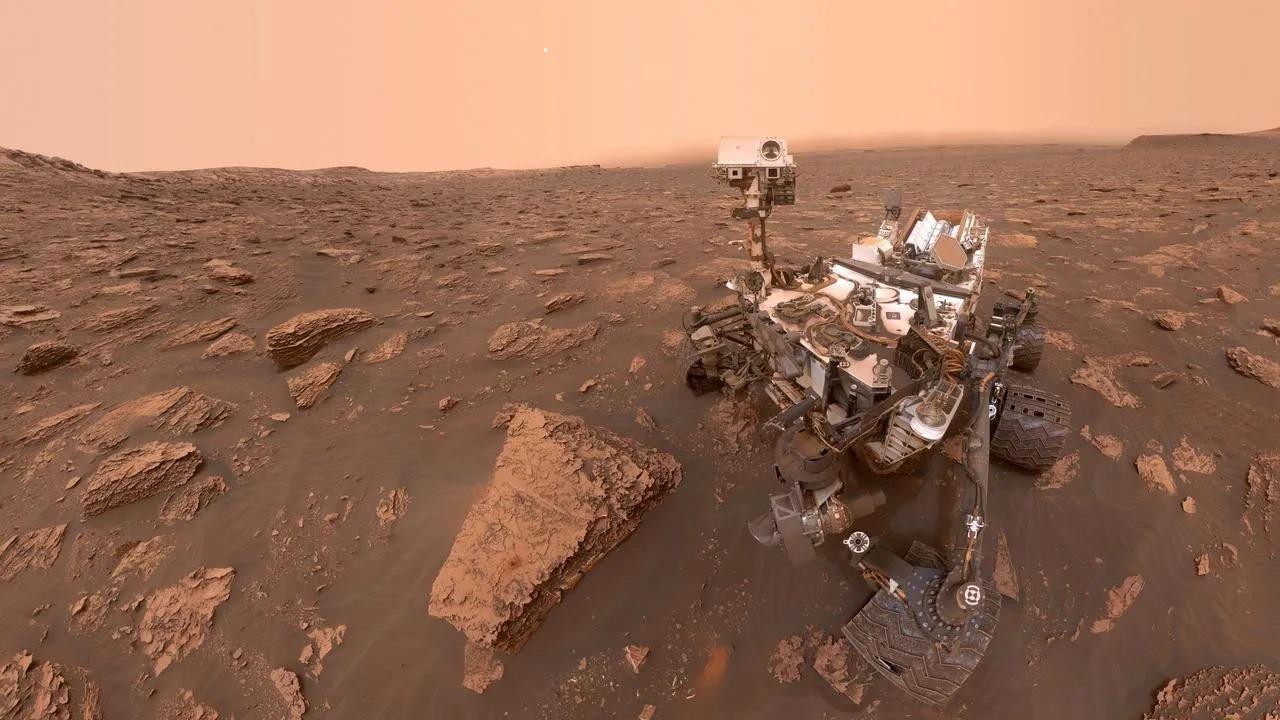
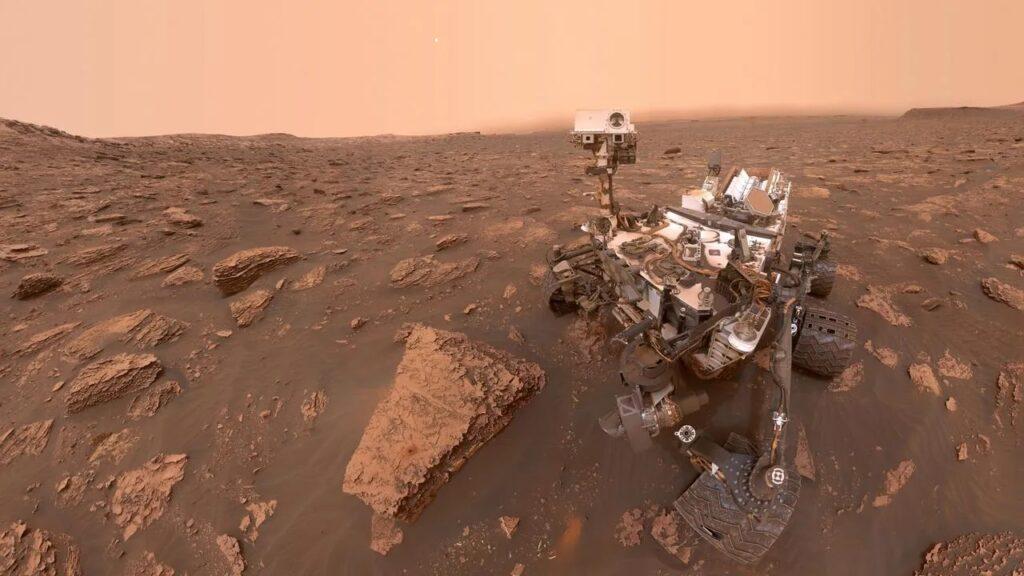
 G4Media.roRoverul Perseverance a detectat cele mai mici particule de prafRoverul Perseverance al NASA a identificat pe Marte particule de praf ultrafine, cu dimensiuni de aproximativ 100 de nanometri, de circa 500 de ori mai
🚀#NASA schimbă planul pentru întoarcerea oamenilor pe 🌙#Lună în 2028.
Companiile lui Elon #Musk și Jeff #Bezos vor folosi două strategii diferite pentru transportul echipajelor.
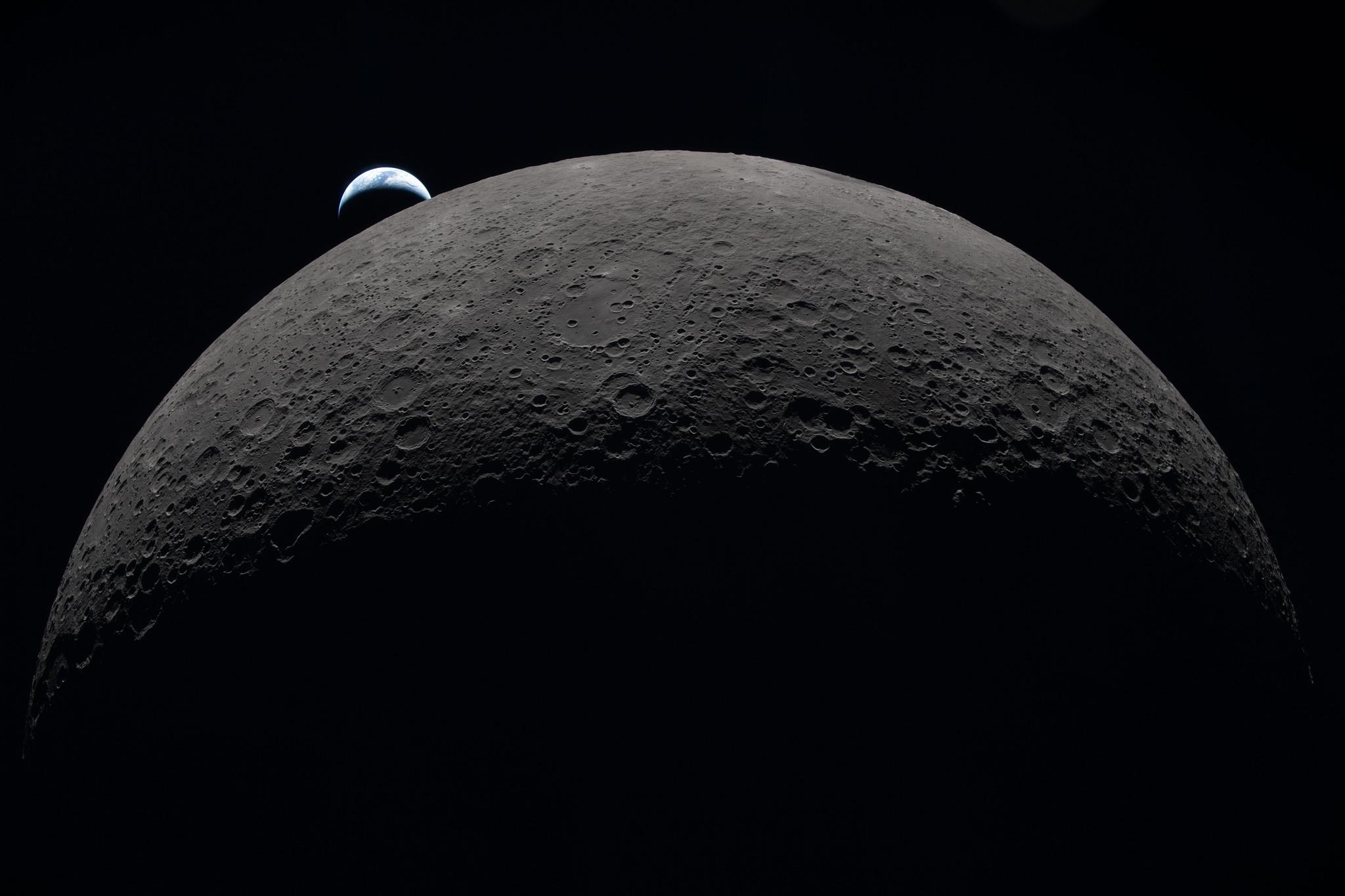
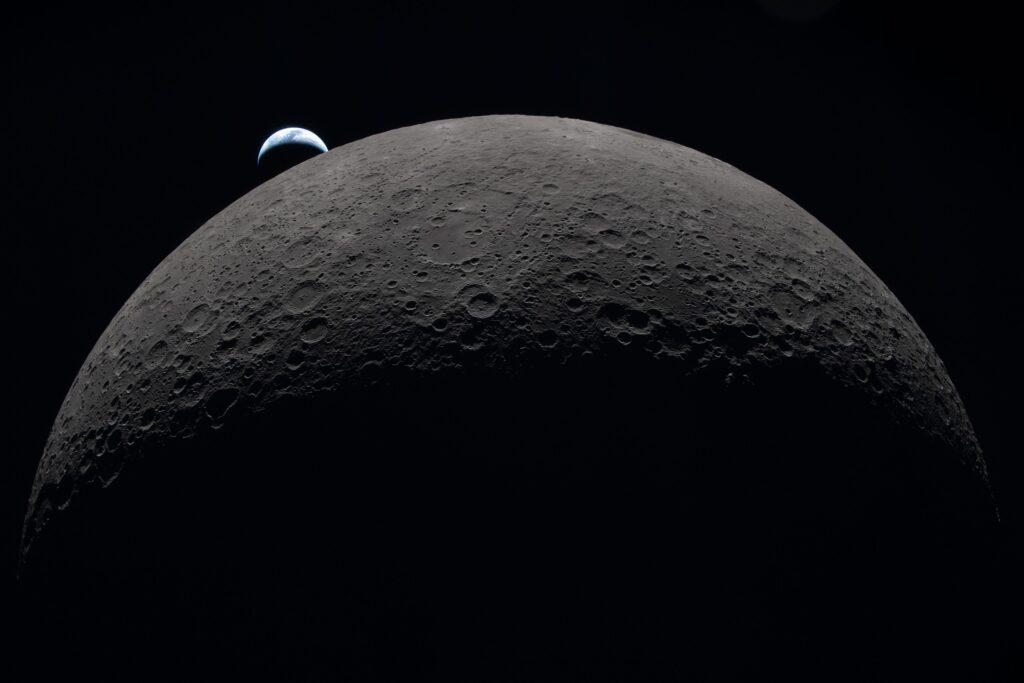
 G4Media.roNASA schimbă planul pentru întoarcerea oamenilor pe Lună în 2028NASA schimbă planul pentru întoarcerea oamenilor pe Lună: Elon Musk și Jeff Bezos vor folosi strategii diferite pentru echipaje.
October 28, 2026
The Mutual Occultation of Ganymede and Io
* Credit & Copyright: Michael Wong
https://www.astromw.com/
Explanation:
Jupiter is one of the least lonely planets in the Solar System, at least when it comes to natural satellites. 115 moons have been discovered orbiting Jupiter so far! (Saturn has the most with 293, but who’s counting.) Ganymede and Io, two of Jupiter’s Galilean moons, met in the sky on October 20th, 2026. Today’s video captures the meeting, with Ganymede briefly blocking Io from view. This event, when an astronomical object passes in front of another and either completely or partially blocks it, is called a mutual occultation. The mutual occultations of Galilean moons are rare to witness because they require Earth’s edge-on view of their orbits. This occurs once every 6 years when Jupiter reaches its equinox and appears less “tilted”. Ganymede is also casting its shadow on Jupiter’s right side. Any fictional Jovian species within the shadow would experience a solar eclipse!
#space #jupiter #atmosphere #astrophotography #photography #science #nature #NASA #ESA #Hubble #apod
October 27, 2026
Noctilucent Clouds over Sweden
* Credit & Copyright: V. Höfer, D. Večerník & B. Večerníková
* Text: Jerry Bonnel
Explanation: Sometimes it's night on the ground but day in the air. As the Earth rotates to eclipse the Sun, sunset rises upfrom the ground. Therefore, at sunset on the ground, sunlight still shines on clouds above. Under usual circumstances, a pretty sunset might be visible, but unusual noctilucent clouds float so high up they can be seen well after dark. Normally too dim to be seen, they may become visible just after sunset during the summer when illuminated by sunlight from below the horizon. Noctilucent clouds are the highest clouds and are known more technically as polar mesospheric clouds. Featured here as they appeared in early August, a network of blue noctilucent clouds was captured in the distant sky above a field of green grass near Linköping, Sweden, with trees in stark silhouette across the horizon. Much about noctilucent clouds has been discovered only in the past two decades, while how they form and evolve remains a topic of active research.
https://science.nasa.gov/image-article/apod-2026-october-27-noctilucent-clouds-over-sweden/
#space #mars #atmosphere #noctilucent #astrophotography #photography #science #nature #NASA #apod

 NASA ScienceAPOD: 2026 October 27 - Noctilucent Clouds over Sweden - NASA Science
🚀#NASA schimbă regulile de selecție a misiunilor științifice pentru a reduce costurile și durata proiectelor.


 G4Media.roNASA schimbă regulile de selecție a misiunilor științificeNASA revizuiește procedurile prin care selectează și dezvoltă misiunile științifice, cu scopul de a reduce costurile și de a trimite mai rapid și mai
October 26, 2026
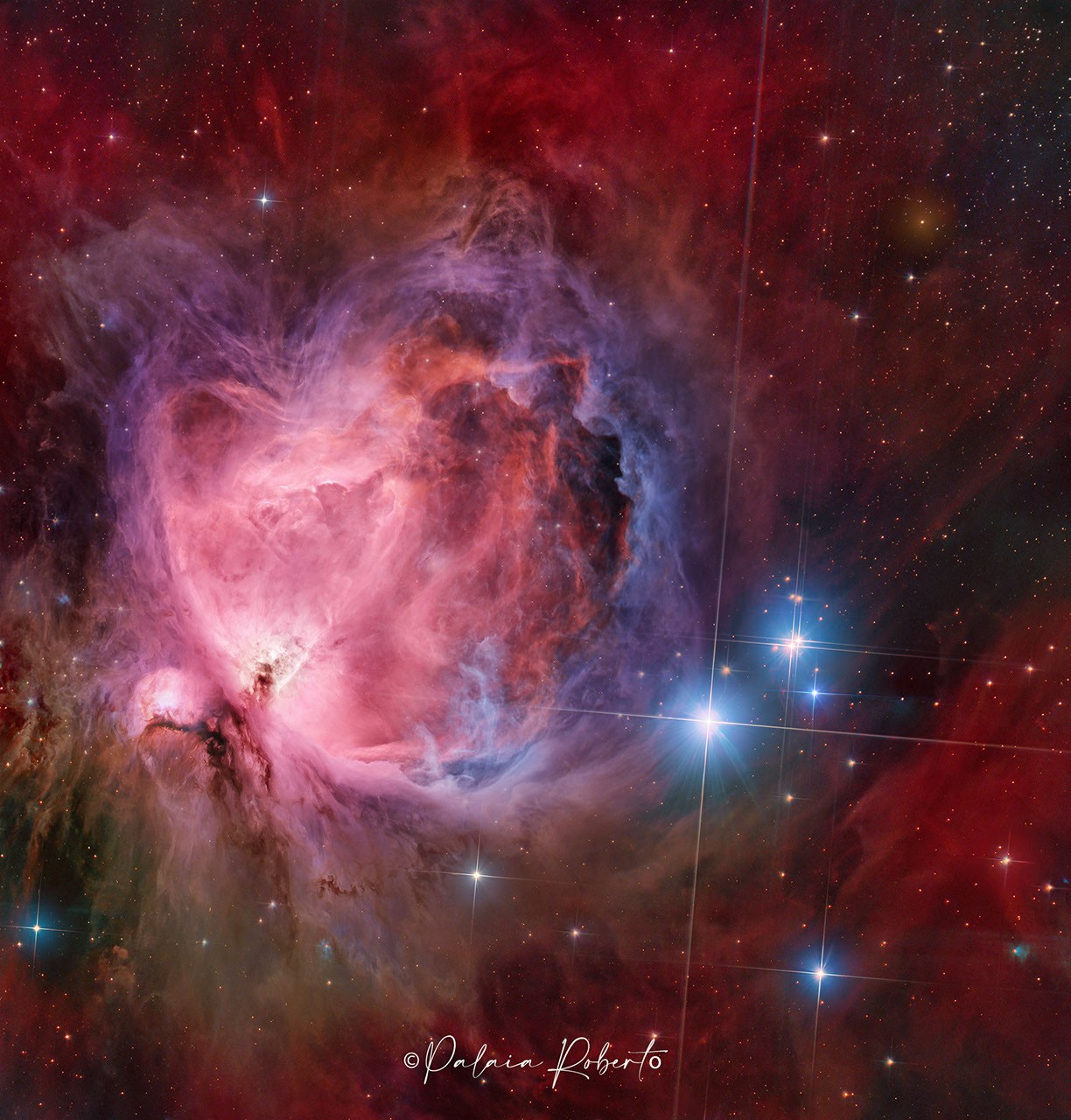
M42: The Great Nebula in Orion
* Credit & Copyright: Roberto Palaia
Explanation:
The Great Nebula in Orion, an immense, nearby starbirth region, is one the most famous of all astronomical nebulas. Here, glowing gas surrounds hot young stars at the edge of an immense interstellar molecular cloud only 1500 light-years away. In the featured deep image in assigned colors highlighted by emission in hydrogen, wisps and sheets of dust and gas are particularly evident. The Great Nebula in Orion can be found with the unaided eye near the easily identifiable belt of three stars in the popular constellation Orion. In addition to housing a bright open cluster of stars known as the Trapezium, the Orion Nebula contains many stellar nurseries. These nurseries contain much hydrogen gas, hot young stars, proplyds, and stellar jets spewing material at high speeds. Also known as M42, the Orion Nebula spans about 40 light years and is located in the same spiral arm of our Galaxy as the Sun.
https://science.nasa.gov/image-article/2026-october-26-m42-the-great-nebula-in-orion/
#space #nebula #astrophotography #photography #science #nature #ESA #NASA #apod

 NASA Science2026 October 26 - M42: The Great Nebula in Orion - NASA Science
October 25, 2026
Dark Matter in a Simulated Universe
* Credit & Copyright: Tom Abel & Ralf Kaehler (KIPAC , SLAC), AMNH
https://kipac.stanford.edu/people/tom-abel
https://www.slac.stanford.edu/~kaehler/
https://kipac.stanford.edu/
https://www6.slac.stanford.edu/
https://www.amnh.org/
* Text: Jerry Bonnell
Explanation:
Is our universe haunted? It might look that way on this dark matter map. The gravity of unseen dark matter is the leading explanation for why galaxies rotate so fast, why galaxies orbit clusters so fast, why gravitational lenses so strongly deflect light, and how visible matter is distributed. The featured image from the American Museum of Natural History's Hayden Planetarium Space Show, Dark Universe, highlights one example of how pervasive dark matter might haunt our universe. In this frame from a detailed computer simulation, complex filaments of dark matter, shown in black, are strewn about the universe like spider webs, while the relatively rare clumps of familiar baryonic matter are colored orange. These simulations are good statistical matches to astronomical observations. In what is perhaps a scarier turn of events, dark matter -- although quite strange and in an unknown form -- is no longer thought to be the strangest source of gravity in the universe. That honor now falls to dark energy, a more uniform source of repulsive gravity that seems to now dominate the expansion of the entire universe.
https://science.nasa.gov/image-article/apod-2026-october-25-dark-matter-in-a-simulated-universe/
#space #universe #map #astronomy #astrophotography #photography #science #nature #NASA #ESA #rubin #education #apod

 Kavli Institute for Particle Astrophysics and Cosmology (KIPAC)Tom AbelProfessor of Particle Physics and Astrophysics and of Physics
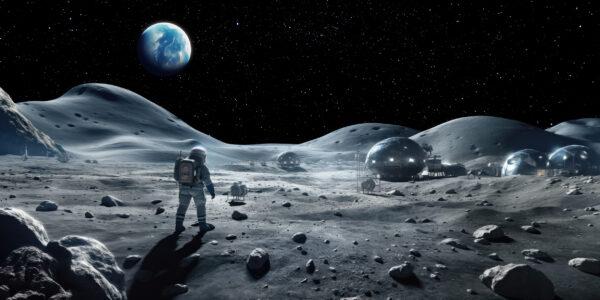
 G4Media.roNASA avansează cu dezvoltarea roverelor lunare pentru viitoarea bază de pe LunăNASA a prezentat marți o actualizare privind dezvoltarea vehiculelor robotizate și a roverelor capabile să transporte astronauți pe Lună, care vor
October 24, 2026
* Credit: ESA/Rosetta/Philae/CIVA
http://rosetta.esa.int/
* Text: Jerry Bonnell
Explanation:
This Rosetta spacecraft selfie was snapped on October 7th, 2014. At the time the comet-chasing spacecraft was about 472 million kilometers from planet Earth, but only 16 kilometers from the surface of comet 67P/Churyumov-Gerasimenko. Looming beyond the spacecraft near the top of the frame, dust and gas stream away from the comet's curious double-lobed nucleus. Bright sunlight glints off one of Rosetta's 14 meter long solar arrays. In fact, two exposures, one short and one long, were combined to record the dramatic high contrast scene using the CIVA camera system on Rosetta's still-attached Philae lander. Its chosen primary landing site was on the visible hemisphere of the smaller lobe of the nucleus. This was the last image from Philae's camera before the lander separated from Rosetta on November 12. Shortly after separation Philae took another image looking back toward the orbiter and began its descent to the nucleus of the comet.
https://science.nasa.gov/image-article/apod-2026-october-24-rosettas-selfie/
#space #comets #astrophotography #photography #science #astronomy #nature #NASA #education #apod

 NASA ScienceAPOD: 2026 October 24 – Rosetta's Selfie - NASA Science
October 23, 2026
Andromeda in Southern Spring
* Credit & Copyright: Lucy Yunxi Hu
https://www.astrolucyhu.com/about-lucy
* Text: Jerry Bonnell
Explanation:
Looking toward the north from Mullion, New South Wales, Australia, the Andromeda Galaxy never gets more than a few degrees above the horizon. During the southern hemisphere spring, Andromeda is highest in the sky around midnight though. And in this telephoto scene from October 10/11, multiple exposures were used to reveal the spiral galaxy in tantalizing detail as it climbed above rolling Australian hills. Also known as M31, the Andromeda Galaxy is one of the brightest objects in the Messier catalog, but is only visible to the unaided eye as a small, faint, fuzzy patch. Digitally tracked and stacked frames were combined with a foreground shot in the deep astro-image composite to reveal the galaxy's greater extent in planet Earth's night. In the springtime night skyscape,the closest large spiral galaxy spans nearly 6 full moons.
https://science.nasa.gov/image-article/apod-2026-october-23-andromeda-in-southern-spring/
#space #galaxy #astrophotography #photography #science #astronomy #nature #NASA

October 22, 2026
The First Green Star, WD J1330+6435
* Credit & Copyright: Mark A. Garlick/University of Warwick
https://markgarlick.com/
https://warwick.ac.uk/
* Text: Cecilia Chirenti
Explanation:
Star light, star bright: is there a green star out tonight? Other than the Sun, all stars are so far from Earth that they appear as points in the sky. They are mostly white, but sometimes noticeably red or blue. This color typically relates to the temperature: blue stars are hotter than red stars. What about other colors? The featured image is an illustration showing WD J1330+6435, a white dwarf star, surrounded by an accretion disk with gas and rocks orbiting the star. White dwarfs are small, faint stars that are left over when a star like the Sun exhausts its nuclear fuel. Astronomers recently found that some white dwarf stars, despite their name, would appear yellow, green, cyan, pink, or purple. In these cases, trace elements that were accreted to these stars interact with the stellar atmosphere and shift its normally white color. But, alas! I wish I may, I wish I might, but they are too faint to see tonight...
https://science.nasa.gov/image-article/apod-2026-october-22-the-first-green-star-wd-j13306435/
#space #dwarfs #giants #astrophotography #photography #science #astronomy #physics #nature #NASA #ESA #education #apod

 MarkGarlick.comHome | MarkGarlick.comOnline gallery of space and astronomical illustration and animation
.. annotated Version of previous posted image ..
The three new objects visible in oxygen are labeled in this annotated version of the image. Please read more about this image in previous post.
#space #nebula #astrophotography #photography #science #nature #ESA #NASA #apod

October 21, 2026
New Ghosts Revealed in Cassiopeia
* Credit & Copyright: Louis Leroux-Géré, Thibault Rouillée, Vincent Martin, Cédric de Decker (Starfront Observatories)
https://www.instagram.com/lrx.photo/
https://www.instagram.com/tybr
https://www.instagram.com/vincent.astro/
https://www.instagram.com/lesphotosdecedric/
https://starfront.space/
Explanation:
Jinkies, look at all those ghosts! It took 100 hours of observation and a special oxygen filter for today’s image to capture three faint nebulas hidden in the Cassiopeia constellation. IC 59 and IC 63, the original Ghosts of Cassiopeia, haunt the region near multi-star system γ Cassiopeia. Energetic light from γ Cassiopeia causes the hydrogen gas in IC 59 and 63 to glow red. Their dust reflects and scatters some blue-ish white starlight. Newly discovered Objects 1, 2, and 3 appear as blue phantoms, revealing the presence of ionized oxygen. But ionized by what? Like at the bow of a speeding boat, γ Cassiopeia may be piling up material as the system moves through interstellar gas and dust. It follows that Object 3 may be the compressed and heated oxygen of that bow shock. Object 1 could be a planetary nebula if a central white dwarf is identified. The origins of these astronomical apparitions remain a mystery to be solved.
https://science.nasa.gov/image-article/apod-2026-october-21-new-ghosts-revealed-in-cassiopeia/
#space #nebula #astrophotography #photography #science #nature #ESA #NASA #apod

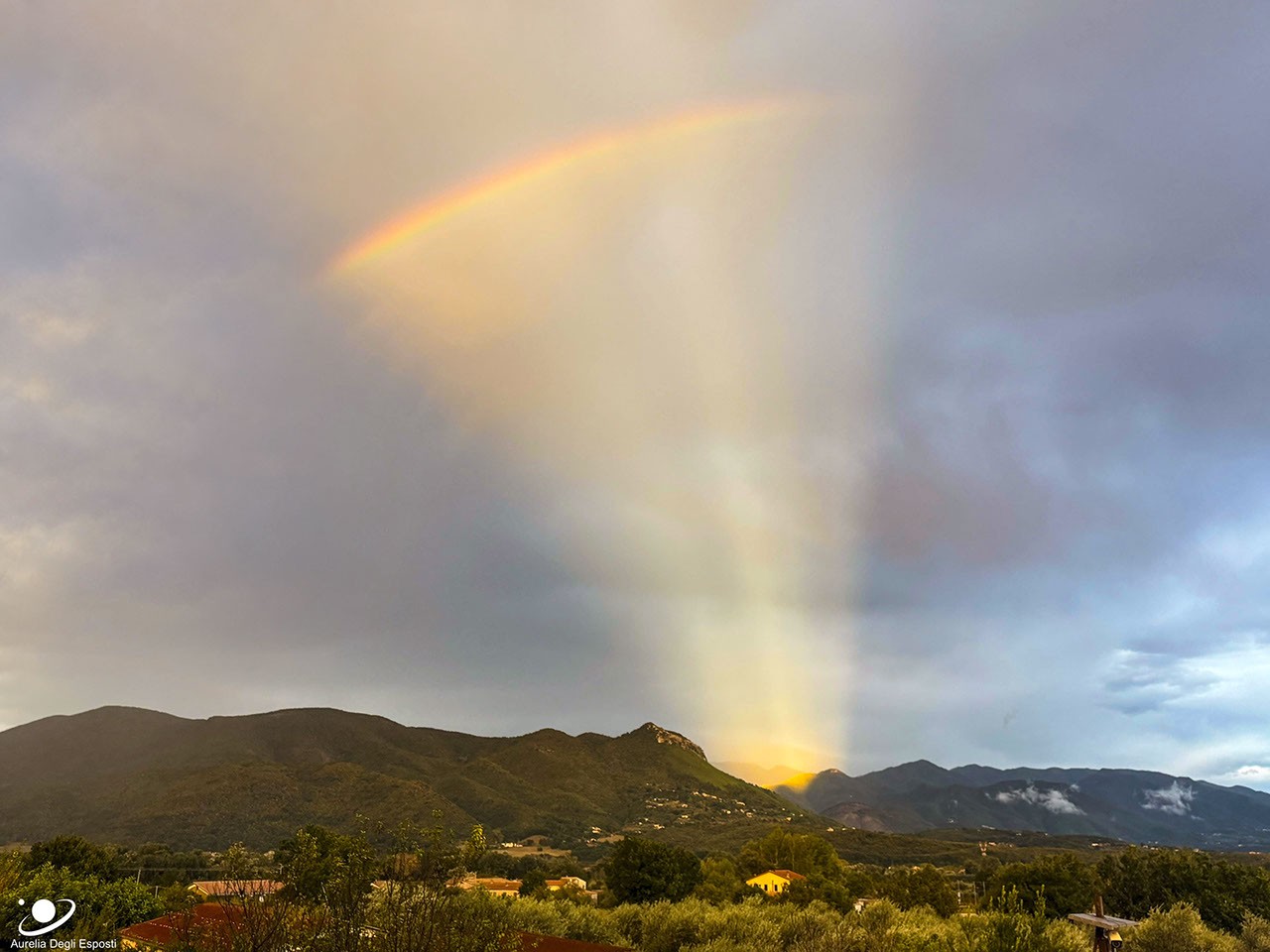
"A Fan-tastic Sign From Heaven"
October 20, 2026
An Anticrepuscular Rainbow Fan
* Credit & Copyright: Aurelia Degli Esposti
Explanation:
This is an unusual rainbow. For one thing, the rainbow is not complete, appearing only in a sunlit fan -- but that by itself is not very unusual. What is most unusual is the fake location of the Sun. The Sun appears to be toward the front, just below those hills -- but it is not. That is not how rainbows work. Rainbows involve a backward reflection from falling rain, so that the Sun must really be behind you. In this case, gaps between clouds near the setting Sun allowed rays to cross the entire sky and appear to converge in front, an unusual phenomenon called anticrepuscular rays. The photo was taken with a phone last week at sunset in Presenzano, Italy. The seemingly reverse rainbow was noticed when hanging up laundry.
https://science.nasa.gov/image-article/apod-2026-october-20-an-anticrepuscular-rainbow-fan/
#space #earth #rainbow #anticrepuscular #sun #astrophotography #photography #NASA #science #physics #nature #apod

 NASA ScienceAPOD: 2026 October 20 - An Anticrepuscular Rainbow Fan - NASA Science
El rover #Perseverance de la #NASA establece un nuevo récord de distancia recorrida en otro mundo
ESA's Euclid mission is surveying the sky to explore the composition and evolution of the dark Universe.
But how can Euclid see the invisible? Watch this video to learn about the light-bending effect that enables scientists to trace how dark matter is distributed in the Universe.
By making use of Euclid’s flagship simulation, the video illustrates how dark-matter filaments subtly alter the shape of galaxies. Light travelling to us from vastly distant galaxies is bent and distorted by concentrations of matter along its way. The effect is called gravitational lensing because matter (both ‘normal’ and dark matter) acts as a kind of magnifying glass.
Scientists distinguish between strong and weak gravitational lensing. In strong gravitational lensing distortions of background galaxies or other light sources are very apparent, resulting in arcs, multiple images or so-called Einstein rings. In weak lensing, background sources appear only mildly stretched or displaced. This means we can only detect this effect by analysing large numbers of sources in a statistical way.
The further we look, the more prominent the distortions from weak gravitational lensing are, because there are more dark-matter structures acting as lenses between us and the light sources.
Euclid will measure the distorted shapes of billions of galaxies over 10 billion years of cosmic history, providing a 3D view of the dark matter distribution in our Universe. This will shed light on the nature of this mysterious component.
The map of the distribution of galaxies over cosmic time will also teach us about dark energy, which affects how quickly the Universe expands. By charting the Universe’s large-scale structure in unprecedented detail, Euclid will enable scientists to trace how the expansion has changed over time.
* CREDIT
ESA/Euclid Consortium/Cacao Cinema
#space #galaxy #astrophotography #photography #science #physics #nature #NASA #ESA
2014 May 12
Illustris Simulation of the Universe
* Video Credit: Illustris Collaboration, NASA, PRACE, XSEDE, MIT, Harvard CfA;
https://physics.mit.edu/faculty/mark-vogelsberger/
https://www.illustris-project.org/people/
https://prace-ri.eu/
https://www.cfa.harvard.edu/
https://www.xsede.org/
https://www.nasa.gov/
* Music: The Poisoned Princess (Media Right Productions)
https://www.mediarightproductions.com/
Explanation:
How did we get here? Click play, sit back, and watch. A new computer simulation of the evolution of the universe -- the largest and most sophisticated yet produced -- provides new insight into how galaxies formed and new perspectives into humanity's place in the universe. The Illustris project -- the largest of its type yet -- exhausted 20 million CPU hours following 12 billion resolution elements spanning a cube 35 million light years on a side as it evolved over 13 billion years. The simulation is the first to track matter into the formation of a wide variety of galaxy types. As the virtual universe evolves, some of the matter expanding with the universe soon gravitationally condenses to form filaments, galaxies, and clusters of galaxies. The above video takes the perspective of a virtual camera circling part of this changing universe, first showing the evolution of dark matter, then hydrogen gas coded by temperature (0:45), then heavy elements such as helium and carbon (1:30), and then back to dark matter (2:07). On the lower left the time since the Big Bang is listed, while on the lower right the type of matter being shown is listed. Explosions (0:50) depict galaxy-center supermassive black holes expelling bubbles of hot gas. Interesting discrepancies between Illustris and the real universe do exist and are being studied, including why the simulation produces an overabundance of old stars.
https://apod.nasa.gov/apod/ap140512.html
* i converted and compressed this video to mp4 -crf 28 with ffmpeg
#space #universe #map #astronomy #astrophotography #photography #science #nature #NASA #ESA #education