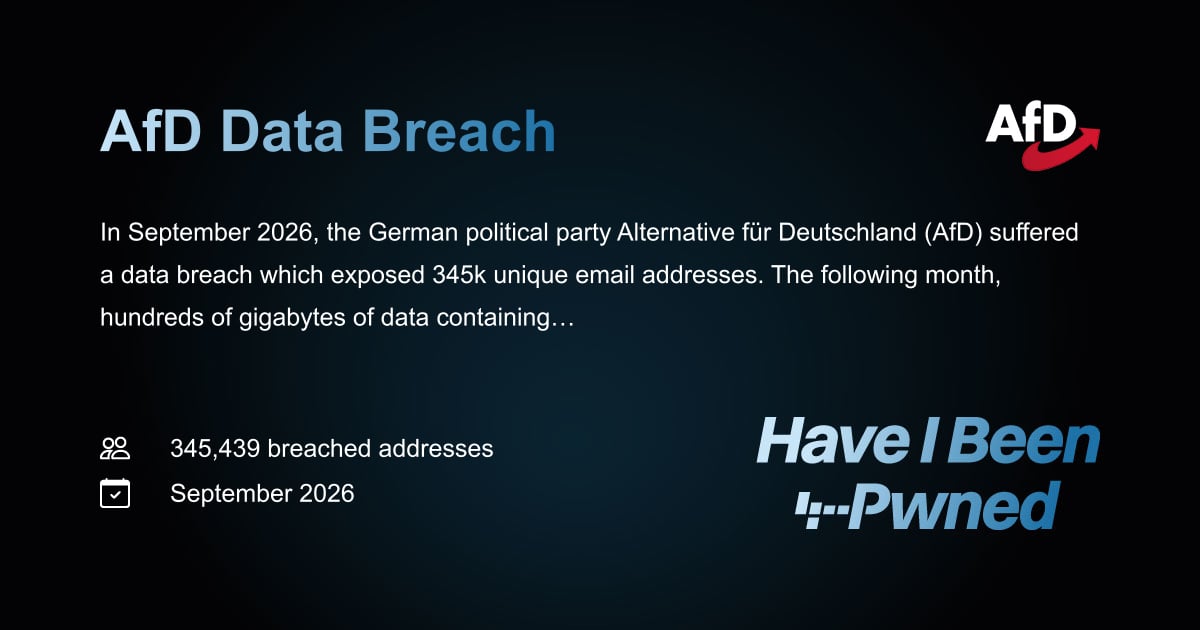
New sensitive breach: German political party AfD suffered a breach last month that resulted in hundreds of thousands of emails and attachments being published, exposing 345k unique email addresses. 47% were already in @haveibeenpwned. Read more: https://haveibeenpwned.com/Breach/AfD
Federated
Good conversations travel.
Public updates from xsukax and this corner of the network.
Sign In to your accountPublic posts known to this server, including selected instances.
HR in India changes fast. New Labour Codes, a new Income-tax Act, state-specific compliance rules, and rising employee expectations mean HR teams are constantly learning.
The QkrHR blog is built to make that learning easier.
What you will find on the QkrHR blog
Practical, plain-language guides for HR teams, founders, finance professionals, and employees across India. Topics include:
Compliance and payroll
- How India's Labour Codes affect salary structures, PF, and gratuity
- Payroll compliance for teams spread across multiple states
- Union Budget highlights for HR and payroll teams
- Statutory compliance basics for PF, ESI, Professional Tax, LWF, and TDS
Leave and attendance
- Sandwich leave policy: meaning, rules, and legality
- Leave and attendance management best practices
- Shift management and time and attendance systems
HR strategy and operations
- HR metrics every organisation should track
- Human resource planning
- The performance management cycle
- Writing effective HR policies
- HR workflow management
Choosing and implementing HRMS
- What an HRMS is and why businesses need one
- HRMS pricing in India and how to compare costs
- HRMS implementation checklists and adoption tips
- HR software for small businesses and startups
City and industry guides
- HR and payroll software guides for major Indian cities
- Payroll for manufacturing companies
The HR glossary
Short, clear explanations of HR terms, from absenteeism and appraisal to Form 16, gross salary, muster roll, probation, and resignation.
Why follow the blog
- Stay updated on legal and tax changes that affect payroll
- Get checklists and steps you can use right away
- Understand HR concepts without jargon
- Share reliable explanations with your team and employees
How QkrHR helps beyond the blog
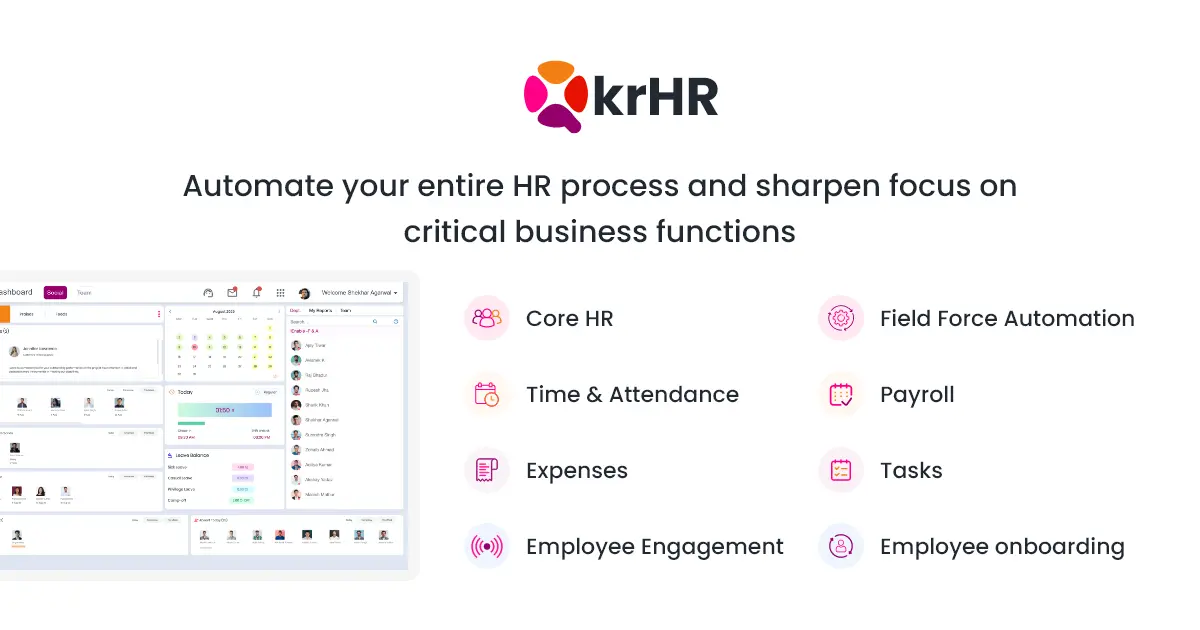
- QkrHR puts these best practices into action with core HR, payroll, leave, attendance, and statutory compliance in one platform
- Statutory compliance, including PF, ESI, Professional Tax for all 18 states, LWF, and TDS, is included in every plan
- 15-day full implementation with free onboarding support and data migration help
- Trusted by 85,000+ users, including organisations such as IIT Roorkee, IIT (BHU) Varanasi, and Shalimar Paints
The bottom line
Good HR decisions start with good information. Bookmark the QkrHR blog, and when you are ready to turn knowledge into automation, see QkrHR in action.
Read the full explanation: https://www.qkrbiz.com/hrms-software/qkrhr-blogs
Book a free demo: https://www.qkrbiz.com/signup
QkrbizHR Blog | Explore All HRMS-Related Insights and Solutions - QkrHRRead the latest HR blogs, payroll compliance guides, workforce tips, and HRMS insights from industry experts on the official QkrHR knowledge blog.
If your performance reviews happen once a year and feel like a surprise to everyone, the problem is not the review. It is the missing cycle around it.
What is the performance management cycle?
The performance management cycle is a continuous process for setting expectations, tracking progress, giving feedback, and rewarding results. Instead of a once-a-year event, it is a loop that keeps employees and managers aligned all year.
The four stages of the cycle
1. Planning
Set clear goals at the start of the cycle. Use KRAs to define areas of responsibility and KPIs or OKRs to measure them. Agree on weightage and success measures with each employee.
2. Monitoring
Track progress through the year. Hold regular check-ins, monthly or quarterly, to discuss what is working, what is blocked, and what needs support.
3. Reviewing
Assess performance against agreed goals. Combine self-assessment, manager assessment, and, where useful, peer input. Use data, not memory.
4. Rewarding and developing
Link outcomes to increments, promotions, recognition, and development plans. Identify high performers, future leaders, and employees who need support.
Then the cycle starts again.
Tools that strengthen the cycle
- KRAs and KPIs for clarity
- OKRs for ambitious, aligned goals
- 9-box grid to map performance against potential
- Continuous feedback and recognition
- Performance improvement plans where needed
Common mistakes
- Setting goals and forgetting them until review time
- Reviews based on the last month, not the whole year
- No link between ratings and increments
- Managers untrained in giving feedback
- Running the whole process on spreadsheets and email
Tips for a smoother cycle
- Keep goals few and measurable
- Schedule check-ins in advance
- Document feedback as you go
- Calibrate ratings across teams for fairness
- Communicate outcomes clearly and on time
How QkrHR helps
- The Growth plan includes performance management with KRA/KPI, OKRs, and 9-box
- Appraisal and increment workflows connect review outcomes to pay decisions
- Kudos and the social wall, included in every plan, support everyday recognition
- Reminders and auto-escalation keep each stage of the cycle on schedule
The bottom line
Great performance management is a cycle, not an event. Plan clearly, check in often, review fairly, and reward consistently, and performance will improve across the organisation.
Read the full explanation: https://www.qkrbiz.com/hrms-software/performance-management-cycle-guide
Book a free demo: https://www.qkrbiz.com/signup
#PerformanceManagement #AppraisalCycle #OKRs #HRIndia #QkrHR
Hiring across states is a sign of growth. But the day your first employee joins in a new state, your payroll compliance gets more complicated.
Why multi-state payroll is different
In India, several payroll obligations are set at the state level. An employee in one state may face different Professional Tax rules, Labour Welfare Fund contributions, and Shops and Establishments requirements than a colleague doing the same job in another state.
Central vs state obligations
Central (same everywhere):
- Provident Fund
- Employees' State Insurance
- TDS under the Income-tax law
- The four Labour Codes
State-specific (varies by location):
- Professional Tax: some states levy it, some do not, and slabs and payment cycles differ
- Labour Welfare Fund: applies in some states, with different amounts and frequencies
- Shops and Establishments rules: registration, working hours, holidays, and records
- State rules under the Labour Codes, notified separately by each state
Common multi-state mistakes
1. Applying head office state rules to every employee
2. Missing PT registration in a new state
3. Forgetting LWF contributions with half-yearly or annual cycles
4. Not updating rules when an employee transfers between states
5. Remote employees whose work location is never recorded correctly
Best practices for multi-state payroll
- Record each employee's actual work location, not just the hiring entity
- Register in every state where you have obligations
- Build a state-wise compliance calendar for PT, LWF, and other due dates
- Handle transfers as a formal event that updates statutory settings
- Review state rule changes regularly, especially after Labour Code notifications
- Keep registers and returns organised location-wise for inspections
Multi-entity complexity
Many growing groups operate through more than one company. Each legal entity may have its own registrations, payroll, and compliance, which adds another layer to manage.
How QkrHR helps
- Professional Tax for all 18 states, plus PF, ESI, LWF, and TDS under both regimes
- Challans and returns, Form 24Q and Form 16, and a statutory register pack keep filings organised
- Multi-entity payroll is included in the Essential plan, with unlimited legal entities in the Foundation plan
- Statutory compliance is included in every QkrHR plan, with no extra compliance add-on
The bottom line
Multi-state growth should not mean multi-state headaches. Track work locations accurately, keep a state-wise calendar, and use a payroll system built for India's state-by-state rules.
Read the full explanation: https://www.qkrbiz.com/hrms-software/payroll-compliance-for-multi-state-teams-in-india
Book a free demo: https://www.qkrbiz.com/signup
#PayrollCompliance #MultiStatePayroll #ProfessionalTax #HRIndia #QkrHR
"How many leaves do I have left?" If your HR team hears this question every day, your leave process needs an upgrade.
What is a leave management system?
A leave management system is software that handles the full leave lifecycle: defining leave types, calculating balances, accepting applications, routing approvals, updating attendance, and feeding payroll. It replaces leave registers, email chains, and spreadsheet trackers.
Common leave types in Indian organisations
- Earned or privilege leave
- Casual leave
- Sick leave
- Compensatory off
- Maternity leave
- Paternity leave
- Bereavement leave
- Leave without pay
- Optional or restricted holidays
Key rules a leave system must handle
1. Accrual: monthly, quarterly, or yearly credit of leave
2. Carry-forward: how much unused leave moves to the next year, and the maximum limit
3. Encashment: converting unused leave into pay, during service or at exit
4. Sandwich leave: whether weekends or holidays between leave days count as leave
5. Eligibility: rules based on probation, grade, location, or gender
6. Half-day and short leave options
7. Approval levels: who approves which leave type
Signs your leave process is broken
- Employees and HR disagree about leave balances
- Leave approved on chat never reaches payroll
- Managers cannot see who is away before approving
- Year-end carry-forward and encashment take days to calculate
- Policy rules are applied differently across teams
Benefits of a leave management system
- Accurate, real-time balances for every employee
- Faster approvals with full context
- Consistent policy enforcement
- Automatic updates to attendance and payroll
- Fewer HR queries and disputes
Tips for setting up your leave policy in software
- Write the policy first, then configure it exactly
- Test accrual and carry-forward with real examples
- Communicate the rules to employees before go-live
How QkrHR helps
- Unlimited leave types with accrual, carry-forward, leave encashment, and sandwich leave rules are included in the Essential plan
- Employees apply and check balances through the self-service portal and mobile app on Android and iOS
- The Pending Actions inbox, one-tap approvals, reminders, and auto-escalation keep approvals quick
- Attendance-to-payroll sync ensures approved leave flows directly into salary calculations
The bottom line
A good leave management system ends the guesswork. Employees get clarity, managers decide faster, and payroll stays accurate.
Read the full explanation: https://www.qkrbiz.com/hrms-software/leave-management-system
Book a free demo: https://www.qkrbiz.com/signup
#LeaveManagementSystem #LeavePolicy #EmployeeExperience #HRIndia #QkrHR
QkrbizBest Leave Management Software | Apply, Approve & TrackLeave management software that automates requests, approvals and balances. Custom policies, holiday calendars, payroll-ready LOP and a mobile app. Book a demo.
Ask any HR team where most payroll errors begin, and the answer is usually the same: leave and attendance. One missed punch, one unrecorded half-day, or one leave approved on WhatsApp can lead to a wrong salary and an unhappy employee.
What is leave and attendance management?
It is the process of recording when employees work, when they are away, and why. It covers daily attendance, shifts, overtime, leave applications, leave balances, holidays, and corrections. Because payroll depends on this data, accuracy here directly affects salaries, loss of pay, and compliance.
Why leave and attendance belong together
Leave and attendance are two sides of the same record. If an employee is absent, the system needs to know whether it was approved leave, a holiday, a weekly off, or unpaid absence. When the two are tracked separately, HR spends days reconciling them every month.
Common challenges
- Manual registers or spreadsheets that do not match payroll
- Missed punches with no clear correction process
- Leave balances disputed because accrual rules are unclear
- Field and remote employees with no reliable way to mark attendance
- Shifts, night work, and overtime calculated by hand
- Comp-off earned but not tracked
Best practices
1. Capture attendance at the source through biometric, web, or mobile punches
2. Define clear rules for late marks, half-days, and regularisation
3. Configure every leave type with accrual, carry-forward, and encashment rules
4. Route leave and correction requests through a defined approval flow
5. Give employees real-time visibility of their leave balance
6. Lock attendance before running payroll
7. Review absenteeism and overtime trends every month
What employees want
Employees want to apply for leave from their phone, see their balance instantly, and get quick approvals. Meeting these expectations reduces HR queries and builds trust.
How QkrHR helps
- Biometric and web punch, basic shift management, and comp-off rules are included in the Essential plan
- Unlimited leave types with accrual, carry-forward, encashment, and sandwich leave rules
- Attendance-to-payroll sync means approved leave and attendance flow straight into salary calculations
- The Foundation plan adds geo-tagged mobile punch, geofencing, overtime automation with slabs, and WFH tracking
The bottom line
Accurate leave and attendance data is the foundation of accurate payroll. Bring them together in one system, and month-end becomes faster, fairer, and far less stressful.
Read the full explanation: https://www.qkrbiz.com/hrms-software/leave-and-attendance-management
Book a free demo: https://www.qkrbiz.com/signup
#LeaveManagement #AttendanceManagement #PayrollAccuracy #HRIndia #QkrHR
QkrbizHR Attendance Software with Leave Management | All-in-OneManage attendance and leave in one employee attendance management system. Real-time tracking, auto leave balances and payroll-ready reports. Book a demo.
Union Budget 2025 brought one of the biggest personal tax changes in years, and its impact still shapes payroll today. Budget 2026 kept the income tax slabs unchanged, so the 2025 structure continues for Tax Year 2026-27.
Here is what HR and payroll teams need to know.
1. No income tax up to Rs 12 lakh under the new regime
With the enhanced rebate, individuals with taxable income up to Rs 12 lakh pay no tax under the new regime. For salaried employees, the Rs 75,000 standard deduction effectively takes this to Rs 12.75 lakh.
2. Revised new regime slabs
- Up to Rs 4 lakh: nil
- Rs 4 to 8 lakh: 5%
- Rs 8 to 12 lakh: 10%
- Rs 12 to 16 lakh: 15%
- Rs 16 to 20 lakh: 20%
- Rs 20 to 24 lakh: 25%
- Above Rs 24 lakh: 30%
3. New regime remains the default
Employees who do not choose the old regime are taxed under the new one. HR should collect regime declarations early in the year to avoid wrong TDS.
4. A new Income-tax law
The Budget announced a new, simplified income tax law. The Income-tax Act, 2025 is now in force from 1 April 2026, replacing "previous year" and "assessment year" with a single "Tax Year". Form 16 becomes Form 130 and Form 24Q becomes Form 138 from Tax Year 2026-27, while Form 16 still applies for FY 2025-26.
5. Support for gig and platform workers
The Budget announced registration of gig workers on the e-Shram portal, identity cards, and healthcare coverage under PM Jan Arogya Yojana. The Labour Codes also recognise gig and platform workers under social security.
What this means for payroll
- Recalculate TDS projections for employees under both regimes
- Help employees compare the regimes before they choose
- Update payroll systems and tax forms for the new Income-tax Act
- Communicate changes clearly so employees understand their take-home pay
Common payroll mistakes to avoid
- Applying the wrong regime because declarations were not collected
- Ignoring the standard deduction in monthly TDS projections
- Using old form names and references after the new Act took effect
How QkrHR helps
- TDS under both the old and new regimes, with Form 24Q and Form 16 support
- Challans, returns, and a statutory register pack keep compliance organised
- Statutory compliance is included in every QkrHR plan
- The employee self-service portal and mobile app give employees easy access to payslips and tax documents
The bottom line
Tax changes reach every employee's payslip. Accurate TDS, clear communication, and an up-to-date payroll system keep both employees and the company on the right side of the law.
Tax rules change. Please confirm specific cases with your CA.
Read the full explanation: https://www.qkrbiz.com/hrms-software/key-highlights-union-budget-2025-for-hrs
Book a free demo: https://www.qkrbiz.com/signup
foss-gbg kommer delta på en workshop med Sveriges Ingenjörer om framtiden för FOSS i Göteborg-ish. Kom gärna dit: https://www.meetup.com/foss-gbg/events/317157636/
MeetupHur får vi den Gôtebosska FOSS-scenen att frodas?, Wed, Nov 11, 2026, 6:00 PM | MeetupMycket har hänt i FOSS-världen de senaste åren. Ute i Europa pratas det mycket om digital rådighet, techjättarnas makt och innovationskraften i FOSS. Samtidigt hör vi ofta
What EvilTokens teaches us about defending against AI-assisted attacks https://www.csoonline.com/article/4239703/what-eviltokens-teaches-us-about-defending-against-ai-assisted-attacks.html
CSO OnlineWhat EvilTokens teaches us about defending against AI-assisted attacksAI is compressing the cyberattack lifecycle. Can defenders keep up?
Wordle 1,956 3/6
⬜⬜🟨⬜⬜
🟩🟨⬜🟨⬜
🟩🟩🟩🟩🟩
Three Months for an iPhone Duo #fwb #beer #coffee #review #iphoneduo #friendswithbrews https://www.youtube.com/watch?v=T846AFKk114
This image was taken by NASA's EPIC camera onboard the NOAA DSCOVR spacecraft
Centroid coordinates - Lat: -1.896973, Long: 26.755371
DSCOVR position - x: -1429248.764557, y: -519553.026676, z: -47117.736052
A total of 13 images were taken today
fixed my problem with elisa. for everyone who has the same bug that track progression freezes the app: the problem seems to occur since pipewire got updated to 1.6.10. elisa is using the alsa plugin by default but prefers the pulse audio plugin when installed. on arch simply install the vlc-plugin-pulse package and everything should work again. #arch #linux #kde #elisa #musicplayer #pulseaudio #pipewire #alsa
Humillasión al Trolesito con SUPREMACIA https://youtu.be/r6EgNaOJNjQ #c64
De verrassende overwinning van Lula biedt hoop in een duistere wereld https://jacobin.nl/de-verrassende-overwinning-van-lula-biedt-hoop-in-een-duistere-wereld/
jacobin.nlDe verrassende overwinning van Lula biedt hoop in een duistere wereld – JacobinLula versloeg uiterst rechts in Brazilië. Hij verzekert zichzelf daarmee niet enkel van een definitieve plek in de geschiedenis van de wereldwijde democratie, ook biedt hij waardevolle lessen voor socialisten over de hele wereld.
Video: Possible explosive triggers evacuation of 10 Amsterdam homes https://nltimes.nl/2026/10/27/video-possible-explosive-triggers-evacuation-10-amsterdam-homes
Ineptie touffue
Ich habe die Katzen und die Hühner versorgt, eine meiner Hennen bei Gelegenheit mal genauer angeschaut und mit Kokosöl eingerieben, weil sie Grabmilben hatte, aber festgestellt, dass sich ihre Haut wieder glatt und weich anfühlt, und die Behandlung geholfen hat.
Auch die Stabschrecken sind eingenebelt. Neulich waren sie in der Wohnung spazieren, weil ich den Deckel nicht richtig aufgelegt hatte. 2 von den dreien haben wir dann in der Küche wiedergefunden. Die sind inzwischen glücklicherweise groß und auffällig. Es sind nur 3, da kann man gut durchzählen.
Der Trametentee ist aufgekocht und steht auf dem Ofen zum warmhalten, der Kaffee ist fertig zum Genießen.
Guten Morgen!
Plannable regatta
Arista Networks disclosed a critical SQL injection flaw in VeloCloud Orchestrator On-Prem, CVE-2026-114625, scoring CVSS 9.9. CISA added it to the KEV catalog https://deafnews.it/en/article/arista-velocloud-sql-injection-cve-2026-114625-scores-cvss-99-cisa-deadline-october-26
DeafNewsArista VeloCloud: SQL Injection CVE-2026-114625 Scores CVSS 9.9, CISA Deadline October 26 | DeafNewsArista Networks disclosed CVE-2026-114625, a critical SQL injection in VeloCloud Orchestrator On-Prem rated CVSS 9.9. CISA added it to the KEV catalog on October 23, 2026, giving federal agencies a three-day remediation deadline of October 26.
An employee pays from their own pocket for a client visit, a cab, or a hotel stay. How quickly and smoothly they get that money back says a lot about your company.
What is reimbursement?
Reimbursement is the repayment of expenses an employee has incurred on behalf of the company for official purposes, usually against bills or other proof. The employee is not earning extra money. They are simply getting back what they spent for work.
Common types of reimbursement
- Travel and local conveyance
- Fuel and mileage for own-vehicle use
- Hotel stays and per-diem during business trips
- Mobile and internet used for work
- Client meals and meetings
- Relocation costs
- Training and certification fees, where policy allows
Reimbursement vs allowance
An allowance is a fixed amount paid with salary, whether or not the employee actually spends it. It is generally taxable unless a specific exemption applies.
A reimbursement is the actual amount spent, paid against bills, for official purposes. Genuine business reimbursements backed by bills are generally not treated as taxable salary. The exact tax treatment depends on the nature of the expense, so check specific cases with your tax advisor.
How the process should work
1. A clear policy defines what can be claimed and the limits
2. The employee submits the claim with bills
3. The right manager reviews and approves it
4. Finance verifies and pays
5. Records are kept for audits
Best practices
- Set grade-wise limits so everyone knows what is allowed
- Fix submission deadlines, for example within 30 days of the expense
- Accept digital photos of receipts to avoid lost paper bills
- Define approval levels by amount or category
- Pay on a predictable cycle so employees are not left waiting
- Track spend against budgets by team or project
Common problems
- Lost bills and incomplete claims
- Approvals stuck in someone's inbox
- Rules applied differently across teams
- Mileage claims based on guesswork
- No visibility of spend until month-end
How QkrHR helps
- The Foundation plan includes expense management covering mileage, per-diem, fuel, travel desk, and expense budgets
- Employees can submit claims from the QkrHR mobile app on Android and iOS
- The Pending Actions inbox and one-tap approvals help managers clear claims quickly, with reminders and auto-escalation for delays
- Unlimited approval stages let you match approvals to your policy
The bottom line
Reimbursement is about fairness. When the policy is clear and the process is fast, employees trust the company, and finance gets cleaner records.
Read the full explanation: https://www.qkrbiz.com/hrms-software/hr-glossary/reimbursement
Book a free demo: https://www.qkrbiz.com/signup
#Reimbursement #ExpenseManagement #EmployeeExpenses #HRIndia #QkrHR
QkrbizReimbursement Meaning: Definition, Types & Process | QkrHRLearn what reimbursement means, how claims are submitted and approved, common expense types such as travel and medical, and how it differs from an allowance.
Your new hire has joined. The next few months will tell both of you whether this is the right fit. That period has a name: probation.
What is a probation period?
A probation period is a trial phase at the start of employment. During this time, the employer assesses the new employee's performance, conduct, and fit with the role and team. The employee, in turn, gets to see whether the job matches their expectations. Probation commonly lasts three to six months, and can be longer for senior or specialised roles.
The legal position in India
There is no single central law that fixes the length of probation for private sector employees. The terms usually come from the appointment letter, the company's HR policy, and, where applicable, standing orders. One point is often misunderstood: statutory benefits such as PF and ESI apply from the date of joining for covered employees, whether or not they are on probation.
What your probation policy should define
- Length of the probation period
- Notice period during probation, which is often shorter than after confirmation
- Leave entitlement during probation
- How and when performance will be reviewed
- When probation can be extended, and the maximum extension
- What happens at the end: confirmation, extension, or separation
How to run probation well
1. Share clear expectations on day one
2. Set measurable goals for the probation period
3. Hold check-ins at around 30, 60, and 90 days
4. Document feedback after every review
5. Decide on time, before the probation end date
6. Communicate the decision in writing through a confirmation or extension letter
Common mistakes
- Forgetting the end date, leaving the employee unsure about their status
- Extending probation again and again without clear reasons
- Treating probationers as if they have no rights
- Giving no feedback until the final day
- Inconsistent decisions across teams for similar performance
Why it matters
A well-run probation helps you make better confirmation decisions, gives new hires clarity and confidence, and reduces disputes later. A poorly run one creates uncertainty on both sides.
How QkrHR helps
- The Foundation plan includes onboarding with probation and confirmation tracking, so end dates are not missed
- Documents and letters help issue confirmation and extension letters quickly and consistently
- Reminders and auto-escalation nudge managers to complete reviews on time
- The Growth plan adds performance management with KRA/KPI and appraisal workflows for structured probation reviews
The bottom line
Probation is a two-way evaluation. Set expectations early, review regularly, and decide on time. Your new hires will thank you for the clarity.
Read the full explanation: https://www.qkrbiz.com/hrms-software/hr-glossary/probation-period
Book a free demo: https://www.qkrbiz.com/signup
QkrbizProbation Period Meaning, Rules & Duration in Job | QkrHRProbation period meaning, rules and duration in India: salary, PF & ESI, notice period, resignation, extension, confirmation and govt job rules explained.
Every workplace in India with 10 or more employees has a legal duty to prevent and address sexual harassment. Yet many businesses only think about the POSH Act after a complaint arrives.
What is the POSH Act?
The Sexual Harassment of Women at Workplace (Prevention, Prohibition and Redressal) Act, 2013, commonly called the POSH Act, protects women from sexual harassment at work and sets out a formal process for complaints and redressal. It covers women in all forms of work, including permanent, contract, temporary, part-time, and trainee roles, as well as visitors.
What counts as sexual harassment?
Unwelcome physical contact or advances, demands or requests for sexual favours, sexually coloured remarks, showing pornography, or any other unwelcome physical, verbal, or non-verbal conduct of a sexual nature. Implied threats about a person's job or creating a hostile work environment are also covered.
The "workplace" is defined broadly. It can include client sites, work travel, and transport provided by the employer.
Key employer obligations
1. Internal Committee (IC): every workplace with 10 or more employees must set one up, headed by a senior woman employee, with at least half its members women and one external member from an NGO or with relevant experience.
2. Written policy: publish a clear policy and explain the complaint process.
3. Display: show the consequences of harassment and IC member details at a visible place.
4. Awareness: run regular sessions for employees and training for IC members.
5. Annual report: the IC prepares an annual report for the District Officer.
6. Confidentiality: identities and proceedings must be kept confidential.
How the complaint process works
- A complaint is generally filed within three months of the incident, extendable by three more months for valid reasons
- Conciliation is possible only if the complainant asks for it, and cannot involve a monetary settlement
- The inquiry should be completed within 90 days
- The employer should act on the IC's recommendations within 60 days
Where there are fewer than 10 employees, or the complaint is against the employer, it goes to the Local Committee at the district level.
Non-compliance can attract a fine of up to Rs 50,000, with higher penalties for repeat offences.
How QkrHR helps
QkrHR does not replace your Internal Committee, but it supports the communication and record-keeping side:
- Announcements help share the POSH policy, IC details, and training updates with everyone
- Documents and letters, the self-service portal, and the mobile app keep policies accessible to every employee
- Role-based access and audit trails help protect sensitive HR records
The bottom line
A safe workplace is not just a legal requirement. It is the foundation of trust. Set up your IC, train your people, and make the process clear before anyone needs it.
This post is general information. Please review specific cases with a legal expert.
Read the full explanation: https://www.qkrbiz.com/hrms-software/hr-glossary/posh-act
Book a free demo: https://www.qkrbiz.com/signup
#POSHAct #SafeWorkplace #InternalCommittee #HRCompliance #QkrHR
QkrbizPOSH Act 2013: Full Form, Applicability, ICC & PenaltiesComplete guide to the POSH Act 2013: full form, applicability, ICC composition, complaint process, penalties, and 2025 compliance updates for Indian employers.
A Performance Improvement Plan should not be a polite way of saying "your time here is over." Done right, it is one of the fairest tools a manager has.
What is a PIP?
A Performance Improvement Plan is a formal, documented plan that identifies specific gaps in an employee's performance, sets measurable goals to close them, defines the support the company will provide, and gives a fixed timeline, usually 30 to 90 days.
When should you use a PIP?
- When informal feedback and coaching have not worked
- When an employee consistently misses agreed targets or standards
- When the gap is about performance, not misconduct (misconduct follows the disciplinary process)
What a good PIP includes
1. Specific performance gaps, with real examples
2. Measurable goals linked to the role's KRAs
3. Support offered, such as training, mentoring, or tools
4. A clear timeline and check-in schedule
5. Possible outcomes: successful completion, extension, or further action as per policy
6. Acknowledgement from both the employee and the manager
How to run a PIP fairly
- Talk before you document. The PIP should never be the first time an employee hears about a problem.
- Use data, not opinions. Targets, quality metrics, and deadlines are easier to discuss than impressions.
- Hold regular check-ins, weekly or fortnightly, and record what was discussed.
- Give a genuine chance. Realistic goals and real support make improvement possible.
- Keep it confidential. Share details only with those who need to know.
- Be consistent. Follow your company policy and applicable standing orders the same way for everyone.
Common mistakes
- Vague goals like "be more proactive"
- Timelines too short for meaningful change
- No support, only pressure
- Missing documentation of check-ins
- Using the PIP as a formality when the decision has already been made
Possible outcomes
Many employees improve and successfully close their PIP. Sometimes the plan is extended when progress is real but incomplete. Where there is no improvement, the documented process helps the organisation take further steps fairly and in line with policy and law.
How QkrHR helps
- The Growth plan includes performance management with KRA/KPI and appraisal workflows, so PIP goals connect to real role expectations
- Documents and letters help you issue and store PIP letters against the employee's record
- Task management assigns improvement actions with clear owners and deadlines
- Role-based access and audit trails help keep sensitive performance records secure
The bottom line
A PIP works best when it is specific, supportive, and documented. Treat it as a real chance to improve, and you protect both the employee and the organisation.
Read the full explanation: https://www.qkrbiz.com/hrms-software/hr-glossary/performance-improvement-plan-pip
Book a free demo: https://www.qkrbiz.com/signup
#PIP #PerformanceImprovement #PerformanceManagement #HRIndia #QkrHR
QkrbizPIP Full Form & Meaning: Performance Improvement Plan GuideWhat's the full form of PIP? This guide explains the meaning of a Performance Improvement Plan, its purpose, key components, and answers all HR FAQs.
That's no moon...
-- Obi-wan Kenobi
Current UK Power Demand at 07:07: 31.00GW